
Free resource for speech-language pathologists (SLPs)
Free sentence building activities: color-coded strip, cards and worksheets
Updated
How to use it
Six pages for building sentences, from two words to joined sentences. Page 1 is a color-coded sentence strip (who, doing, what, where and when) with a key and words to cut out. Pages 2 and 3 are 32 picture cards, eight for each part: lay them on the strip to build a sentence, then swap one card to make a new one. Page 4 has the child fix short sentences and make them longer. Page 5 is for older students: join two sentences with and, but, because or so. The last page is for the speech-language pathologist (SLP), with levels from two words to complex sentences, a cueing ladder and a data table. Each part has a color, a shape and its name, so the pages work in black and white too.
How to print
- Pick the pages. Everything is ticked. Untick what you don’t need, or use a shortcut below.
- Press Print. Each page prints on its own sheet of US letter paper.
- Choose your printer in the print window, or “Save as PDF” to keep a copy.
Print pages 1 to 3 in color on card stock if you can. In black and white, each part still has its own shape and name. Use Only pages for the child to leave out the SLP page.
Sentence strip: who, doing, what, where, when
Lay a card in each box, left to right, and read the whole sentence. Start with who and doing, then add a box at a time. Little words like “the”, “a” and “is” go between the cards: say them, but they don’t need a card.
| Part | Color | Ask | Examples |
|---|---|---|---|
| Who | orange | Who is it? | the girl, the dog, a duck |
| Doing | yellow | What are they doing? | is eating, is reading, rode |
| What | green | What is it? | an apple, a book, the bike |
| Where | blue | Where is it? | on the bus, at the beach |
| When | purple | When is it? | today, at night, after school |
| Describing | pink | What kind? | big, silly, hungry, red |
Cut out: when words and describing words. A describing word goes just before the who or what card: “the hungry bear”.
From heysaylo.com/resources/sentence-building-activities. Free to print and use; please don’t sell.
Picture cards: who and doing
Cut along the dashed lines. “Eating” and “wearing” have no picture: act them out.
 nurse
 cat
 duck
 bear
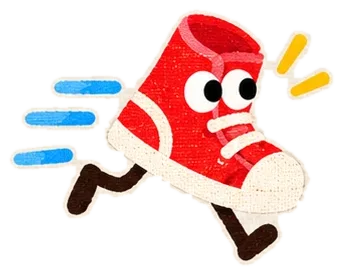 running
 reading
From heysaylo.com/resources/sentence-building-activities. Free to print and use; please don’t sell.
Picture cards: what and where
Cut along the dashed lines. Silly sentences count: “The duck is wearing a crown on the bus.”
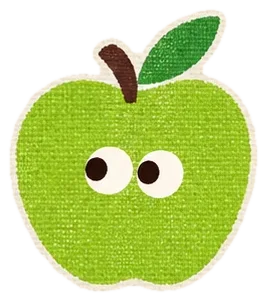 apple
 cookie
 sandwich
 soup
 book
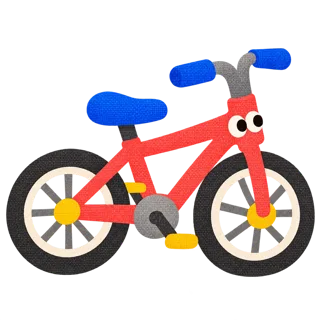 bike
 crown
 scarf
 at the beach
 in the house
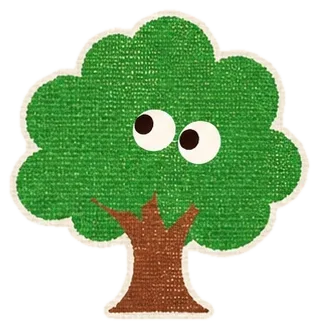 in the tree
 on the bus
 on the couch
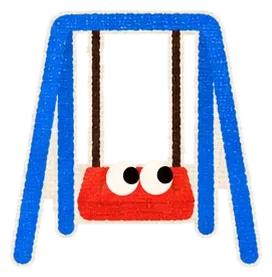 on the swing
 in the rain
 in the car
From heysaylo.com/resources/sentence-building-activities. Free to print and use; please don’t sell.
Fix it and make it longer
Name: ____________________ Date: ______________
Read the short sentence. If a part is missing (____), fill it in. Then add the part in the Add column. Say your new sentence, then write it. Example: “The cat is sleeping.” + where → “The cat is sleeping on the couch.”
Where: on the bus · at the beach · in the tree · at school · When: today · yesterday · at night · after lunch · Describing: big · little · silly · hungry · fluffy · red
| # | Short sentence | Add | Write your longer sentence |
|---|---|---|---|
| 1 | The dog is running. | + where | |
| 2 | The baby is sleeping. | + where | |
| 3 | ____ is reading a book. | + who | |
| 4 | The girl is eating. | + what | |
| 5 | The cat sat on the rug. | + describing word | |
| 6 | We went to the beach. | + when | |
| 7 | Dad is cooking. | + what, + when | |
| 8 | The boy is riding. | + what, + where | |
| 9 | The bear ____ on the swing. | + doing | |
| 10 | A frog jumped. | + describing word, + where | |
| 11 | My friend and I played. | + where, + when | |
| 12 | The duck is wearing. | + describing word, + what |
From heysaylo.com/resources/sentence-building-activities. Free to print and use; please don’t sell.
Join two sentences: and, but, because, so
Name: ____________________ Date: ______________
and adds more · but shows something different or surprising · because gives the reason · so tells what happened next.
Join the two sentences into one with the word given. Put a comma before but and so. Example: “I was hungry. I ate an apple.” → “I was hungry, so I ate an apple.” For the last two, pick the joining word yourself.
| # | Two sentences | Join with | Write one sentence |
|---|---|---|---|
| 1 | I have a dog. I have a cat. | and | |
| 2 | It was raining. We played inside. | so | |
| 3 | I like pizza. I don’t like olives. | but | |
| 4 | Sam went to bed early. He was tired. | because | |
| 5 | We went to the park. We played soccer. | and | |
| 6 | The bus was late. There was a lot of traffic. | because | |
| 7 | I wanted to swim. The pool was closed. | but | |
| 8 | My shoes were muddy. I took them off at the door. | so | |
| 9 | Leo laughed. The joke was funny. | because | |
| 10 | The puzzle was hard. We kept trying. | but | |
| 11 | The store was closed. We went home. | you pick | |
| 12 | Ana loves animals. She wants to be a vet. | you pick |
From heysaylo.com/resources/sentence-building-activities. Free to print and use; please don’t sell.
Levels, cues and data
Levels. Start where the child builds sentences with little help, and move up one part at a time. The cards and strip cover levels 1 to 4; page 5 covers level 5 and starts level 6 with “because”.
| Level | Parts | Example |
|---|---|---|
| 1. Two parts | Who + doing | “Dog running.” → “The dog is running.” |
| 2. Three parts | Who + doing + what | “The girl is eating a cookie.” |
| 3. Four parts | Who + doing + what + where | “The bear is reading a book on the bus.” |
| 4. Five parts | Add when or a describing word | “Yesterday the hungry duck ate soup in the car.” |
| 5. Two ideas | Join with and, but, so | “The cat was sleepy, so it slept on the couch.” |
| 6. Complex | because, when, if; who or that | “The boy who is wearing a crown is on the swing.” |
Cueing ladder. Start at step 1 and add help only when needed. Write the highest step used on the data table.
- Wait and point to the empty box.
- Ask the box’s question: “Where is the bear?”
- Give a choice of two cards: “On the bus or in the tree?”
- Start it for them: “The bear is reading a book on…”
- Model the whole sentence and have the child say it back.
Scoring. Decide before you start what counts: every part for the level, in order, or the little words too (is, the, -ing). Score grammar against the child’s dialect.
Data Child: ____________________
| Date | Level | Correct / 10 | Highest cue step | Notes |
|---|---|---|---|---|
From heysaylo.com/resources/sentence-building-activities. Free to print and use; please don’t sell.
How the sentence strip works
Each box on the strip asks one question. The child finds a card that answers it, lays it in the box and reads the strip from left to right. Little words like “the”, “a” and “is” go between the cards.
- Start with two boxes. Who + doing (“The dog is running”) is already a sentence. Add what, then where, then when, one box at a time.
- Swap one card. Keep the sentence and change one part: “The cat is eating soup. The cat is eating a cookie.” Ask which part changed.
- Silly is fine. “The duck is wearing a crown on the bus” is a correct sentence. Mixing cards makes a new sentence every turn, and silly ones are fun to say.
- Point to the empty box. If the child leaves a part out, point to the box and ask its question: “Where is the bear?”
- Colors, shapes and names. Who is orange with a circle, doing is yellow with a triangle, what is green with a square, where is blue with a diamond, when is purple with a star, and describing words are pink with a heart. If your school already uses a color system, color the boxes to match.
What the research says about color coding
Colorful Semantics is a color-coding approach that Bryan (1997) first described with a 5-year-old boy; the colors show the parts of a sentence, such as who, what doing and what. In a small clinical study, six children aged 5 and 6 had no therapy for 9 weeks, then therapy twice a week for 8 weeks. Their information and grammar scores on a picture test, and information and sentence length in a story retell, improved during therapy but not during the weeks without it. The authors called the results encouraging and called for a larger study (Bolderson et al., 2011).
For older students, several approaches teach grammar rules directly and use shapes and colors as visual support. In one study of 12 Dutch children with specific language impairment (average age 11), five hours of this kind of teaching improved how they produced relative clauses (“the boy who…”), but not how they understood them, and the gains held three months later (Zwitserlood et al., 2015).
A review of grammar intervention for school-age children found a growing body of evidence with many gaps. The biggest gap is for children who have trouble understanding language as well as using it; the evidence so far suggests they need specialist, intensive help (Ebbels, 2014). So treat the strip as a support for your teaching, not a program on its own.
Joining sentences: and, but, because, so
Sentence combining means joining short sentences into one longer one. In a study of 4th graders, students taught sentence combining in pairs got better at joining simple sentences into more complex ones than classmates taught grammar, and their story writing improved too (Saddler & Graham, 2005).
In a study of 30 children aged 10 to 14 with specific language impairment, teaching three types of complex sentence in turn (adverbial clauses, such as ones starting with “because” or “when”, object complements and relative clauses) improved sentence production for most of them. The gains showed on an oral language test but not on reading and writing measures, and twice-weekly sessions did no better than once-weekly ones (Balthazar & Scott, 2018). Page 5 is a first step toward that kind of work: “and”, “but” and “so” join two whole sentences, and “because” adds a reason.
Where sentence building fits in language goals
ASHA’s milestones list putting two or more words together, like “more water” or “go outside”, at 19 to 24 months (ASHA). By 4 to 5 years, sentences are longer and more complex, children use words like “and” to connect information in stories, and they use time words like “yesterday” and “tomorrow” correctly (ASHA).
ASHA lists shorter sentences, and errors with verbs, small grammar words and pronouns, among the signs of a spoken language disorder. Its treatment targets include increasing sentence length and complexity for preschoolers, and, in elementary school, understanding and using more complex sentences and judging and correcting grammar, as on page 4 (ASHA). ASHA also says to target grammar endings that fit the child’s dialect.
For goal wording, see the speech therapy goal bank and speech therapy IEP goals. For background, see developmental language disorder and receptive vs expressive language.
More ways to use the cards
- Expand what the child says. When the child says “Cat eating”, say it back as a full sentence: “Yes, the cat is eating a cookie!” ASHA describes expansions as adding grammatical and semantic detail to what the child says (ASHA).
- Barrier game. Each player has a set of cards. One builds a sentence out of sight and says it; the other builds it from listening, then you compare.
- Ask about one box. Build a sentence, then ask “Who is eating?” or “Where is the cat?” For more, see the WH-question practice sheets.
- More verbs. The action verb flash cards add 36 verbs, each with its -ing and past form, for the doing box.
- Tell a story. Build three sentences, put them in order and tell them with first, next and last. See first, next, last stories and the story retell checklist.
- Describe a scene. Use the strip to talk about a busy picture, such as Silly Scene Detective.
Common questions
What is sentence building in speech therapy?
Activities that help a child put words together into longer, more complete sentences: from two words like “dog running” to sentences with who, doing, what, where and when, and later to joined and complex sentences. SLPs often use picture cards and a sentence strip to show the parts.
Why are the parts of the sentence color-coded?
Colors, shapes and names make each part of a sentence easy to see, so a child can spot what’s missing. Color coding is used in approaches like Colorful Semantics; the research so far is small but encouraging (Bolderson et al., 2011).
What age are these sentence building activities for?
The strip and cards suit children who are starting to put words together into sentences, often preschool and early elementary. ASHA’s milestones list two-word combinations at 19 to 24 months and longer, more complex sentences by 4 to 5 years. Pages 4 and 5 are for children who can read and write short sentences.
Can I use these sheets with my students?
Yes. They’re free to print and use with your students and clients and to send home. Please don’t sell them.
Request a resource or send feedback
Want another version of this, or something new? Spotted a mistake? Tell us.
Sources
- ASHA: Communication milestones: 19 to 24 months.
- ASHA: Communication milestones: 4 to 5 years.
- ASHA Practice Portal: Spoken language disorders.
- Bolderson, S., Dosanjh, C., Milligan, C., Pring, T., & Chiat, S. (2011). Colourful semantics: A clinical investigation. Child Language Teaching and Therapy, 27(3), 344–353.
- Zwitserlood, R., Wijnen, F., van Weerdenburg, M., & Verhoeven, L. (2015). ‘MetaTaal’: Enhancing complex syntax in children with specific language impairment—a metalinguistic and multimodal approach. International Journal of Language & Communication Disorders, 50(3), 273–297.
- Ebbels, S. (2014). Effectiveness of intervention for grammar in school-aged children with primary language impairments: A review of the evidence. Child Language Teaching and Therapy, 30(1), 7–40.
- Saddler, B., & Graham, S. (2005). The effects of peer-assisted sentence-combining instruction on the writing performance of more and less skilled young writers. Journal of Educational Psychology, 97(1), 43–54.
- Balthazar, C. H., & Scott, C. M. (2018). Targeting complex sentences in older school children with specific language impairment: Results from an early-phase treatment study. Journal of Speech, Language, and Hearing Research, 61(3), 713–728.