
Free resource for speech-language pathologists (SLPs)
Free printable S blends flash cards
Updated
How to use it
Forty-eight S blend picture cards on four pages, grouped so you can print just the blend you need: SP and ST, SK and SN, SM, SL and SW, and S clusters at the end of words, such as “ghost” and “mask”. Each card has a picture for children who can’t read yet, the word and a small note naming the blend. Every word was checked by how it sounds, not how it’s spelled. Print one page, or two copies for memory match and go fish.
How to print
- Pick the pages. Everything is ticked. Untick what you don’t need, or use a shortcut below.
- Press Print. Each page prints on its own sheet of US letter paper.
- Choose your printer in the print window, or “Save as PDF” to keep a copy.
SP and ST blends
Cut along the dashed lines. The note under each word names the blend.
The pictures are emoji, so they look a little different on each phone, computer and printer. Print in color if you can.
 spoonsp
 spoolsp
 starst
From heysaylo.com/resources/s-blends-flash-cards. Free to print and use; please don’t sell.
SK and SN blends
Cut along the dashed lines. The note under each word names the blend.
SK is spelled “sc” in scooter and “sch” in school, but it sounds the same as in skunk.
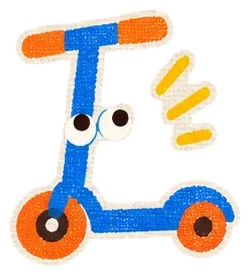 scootersk
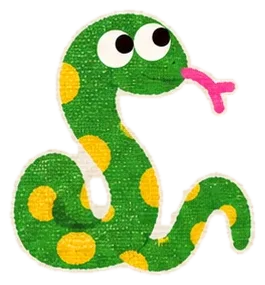 snakesn
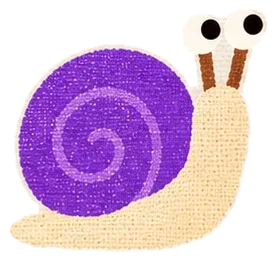 snailsn
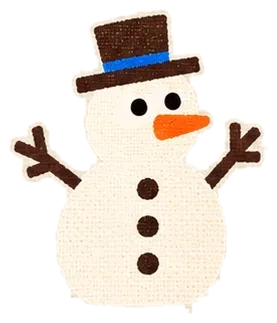 snowmansn
From heysaylo.com/resources/s-blends-flash-cards. Free to print and use; please don’t sell.
SM, SL and SW blends
Cut along the dashed lines. The note under each word names the blend.
The SL cards are also on the L blends page. Few SM words have a clear picture, so there are only two.
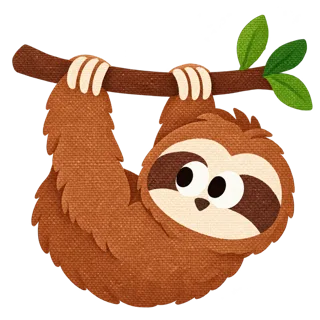 slothsl
From heysaylo.com/resources/s-blends-flash-cards. Free to print and use; please don’t sell.
S blends at the end of words
Cut along the dashed lines. The note under each word names the blend.
Here the S is in a cluster at the end of the word: ST and SK, or KS and TS, where S comes after another sound. “Box”, “fox” and “ax” are spelled with an x but end in K then S.
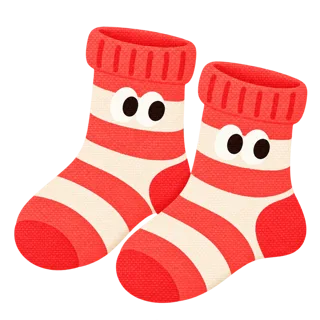 socks-ks
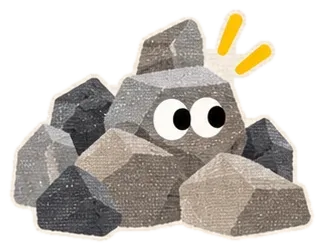 rocks-ks
From heysaylo.com/resources/s-blends-flash-cards. Free to print and use; please don’t sell.
Ways to play with the cards
- Flip and say. Turn one page of cards face down. The child flips a card and says the word three to five times, then keeps it. Count the pile at the end.
- Memory. Print two copies of a page, mix them face down and turn over two at a time. Say both words on every turn, matched or not.
- Go fish. Print two copies and deal five cards each. Ask “Do you have the ___?”, so every turn is a practice try.
- Stretch, then squeeze. Say the first sound long and join it to the rest of the word, then say it faster until the gap closes. Try it on spoon: “sss…poon”.
- Spot my mistake. Say a card with one sound of the blend missing, such as “poon” for spoon or “nake” for snake. The child catches it and says it the right way. For ready-made pairs, see the cluster reduction pairs in the minimal pairs word lists and the minimal pairs flash cards.
- Sort by blend. Mix two pages and sort the cards into piles by the note under the word, saying each one as it goes down.
- Into a sentence. Once single words are steady, put each card into a carrier phrase such as “I see a ___” or “Where is the ___?”
- Snake start. S blends begin with a long, quiet hiss. Hiss like a snake, then slide into the word.
For more game ideas, see speech practice games. For a single S, without a blend, see the S sound flash cards.
About cluster reduction
Saying one sound for a cluster, such as “poon” for spoon or “top” for stop, is called cluster reduction. ASHA’s table of selected phonological patterns gives a likely age of elimination of 5 for clusters with S, and 4 for clusters without S. The ages in that table are compiled from clinical texts, and ASHA notes that the age at which patterns resolve can vary greatly in each child (ASHA).
A child may also say the S wrongly but keep both sounds, such as a lisped S in “spoon”. That’s an S error inside the blend, not cluster reduction; see the S sound guide. For when cluster reduction and other patterns usually fade, see phonological processes by age, and for single sounds, speech sounds by age.
Why some SLPs choose clusters as targets
Clusters are more complex than single sounds. In Gierut’s complexity approach, treating a more complex target is expected to help the rest of the child’s sound system too. In one example from her 2007 review, a child aged 3;2 (years;months) was taught the TW cluster. The child then used TW in 100% of untreated probe words, used other clusters in 79% of probe items, and began using the CH and J sounds, which weren’t taught (Gierut, 2007).
In two single-subject experiments with children aged 3;2 to 7;8 with phonological delays, children taught more complex (marked) clusters showed graded, wider generalization, and children taught less complex (unmarked) ones showed more limited learning (Gierut, 1999).
SP, ST and SK are a special case. Gierut calls them adjuncts, not true clusters. In the same study, children learned them in a pattern that fits simpler (unmarked) sequences (Gierut, 1999), and her 2007 review notes that treating them has been shown to hold back generalization learning (Gierut, 2007). SN, SM, SL and SW aren’t in that group. If you’re choosing an S cluster for wider change, that difference may matter; as practice words, all of these work.
Most of this research used single-subject designs with children whose errors were only in the sound system, with no other delays (Gierut, 2007). Starting with a cluster is one option, not a rule. For how the complexity approach compares with treating early sounds first, see which sound to treat first.
How the words were chosen
- By sound, not spelling. The blend is the first two sounds of each word in General American English.
- A clear picture or no card. Each emoji was checked against its official Unicode name, and words without an emoji that clearly shows them were left out. Only emoji from Unicode 13.0 or earlier are used, so they show on almost every phone and computer.
- The blend comes first. “Sword” is left out because its W is silent, and “scissors” starts with a single S. “Scooter” and “school” are SK words by sound.
- One blend per word where possible. Snowflake (SN and FL) and three-sound clusters such as STR in strawberry and SPL in splash are left out. Skunk ends in NK, and spool’s picture is a spool of thread.
- Vocalic R where no other word worked. Star and skateboard have an R after the vowel, and spider, scooter and sneaker end in an unstressed ER. Set them aside if the child is also working on R.
- SL is on two pages. SL is an S blend and an L blend, so the same five cards are on the L blends flash cards too.
- Concrete words most children aged 4 to 8 can picture. Swap out any card that doesn’t suit the child or how their family talks.
For word shape, facilitating contexts and probe words, see how to choose target words for articulation therapy. For longer lists with phrases and sentences, see the free articulation word lists, and to track practice at home, add the weekly practice log.
Common questions
What are S blends?
Two consonants together at the start of a word, with S first: SP in spoon, ST in star, SK in skunk, SN in snake, SM in smile, SL in sled and SW in swan. SLPs also call them S clusters.
Is SL an S blend or an L blend?
Both. It starts with S and has L second, so the SL cards are on the S blends page and the L blends page.
At what age should a child say S blends?
ASHA’s table of phonological patterns gives 5 as the likely age by which children stop reducing clusters with S, as in “poon” for spoon. Ages vary between children, so ask the child’s speech-language pathologist (SLP).
Is “sword” an SW word?
No. The W in sword is silent, so it starts with a single S. It isn’t on these cards.
Can I print these S blend cards for my caseload?
Yes. They’re free to print and use with your students and clients and to send home. Please don’t sell them.
Request a resource or send feedback
Want another version of this, or something new? Spotted a mistake? Tell us.
Sources
- ASHA Practice Portal: Selected phonological patterns.
- Gierut, J. A. (2007). Phonological complexity and language learnability. American Journal of Speech-Language Pathology, 16(1), 6–17.
- Gierut, J. A. (1999). Syllable onsets: Clusters and adjuncts in acquisition. Journal of Speech, Language, and Hearing Research, 42(3), 708–726.