
Free resource for speech-language pathologists (SLPs)
Free printable P sound flash cards
Updated
How to use it
Thirty-six P picture cards on three pages, built for children who are just starting P. Page 1 is simple one-syllable words with P at the start, spread over ten different vowels. Page 2 is simple one-syllable words with P at the end. Page 3 is longer words, with P in the middle and at the start. Each card has a picture, the word and a small note saying where the sound is. The first two pages suit very young children and children a speech-language pathologist (SLP) is seeing for childhood apraxia of speech or a severe speech sound disorder. Every word was checked by how it sounds, not how it’s spelled.
How to print
- Pick the pages. Everything is ticked. Untick what you don’t need, or use a shortcut below.
- Press Print. Each page prints on its own sheet of US letter paper.
- Choose your printer in the print window, or “Save as PDF” to keep a copy.
P at the start: simple words
Cut along the dashed lines. The note under each word says where the sound is.
One syllable, no blends, and a different vowel in almost every word: peach, pig, page, pen, pan, pot, paw, pup, pie, pouch.
The pictures are emoji, so they look a little different on each phone, computer and printer. Print in color if you can.
From heysaylo.com/resources/p-sound-flash-cards. Free to print and use; please don’t sell.
P at the end: simple words
Cut along the dashed lines. The note under each word says where the sound is.
One syllable, no blends, with eight different vowels. “Up” is just a vowel and P.
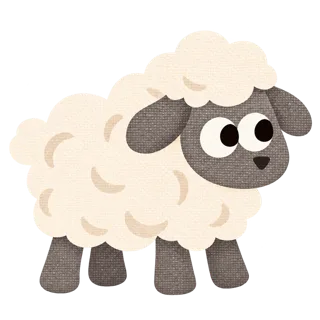 sheepend
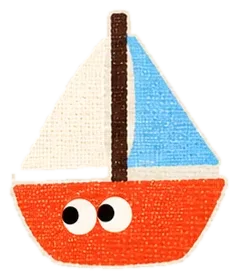 shipend
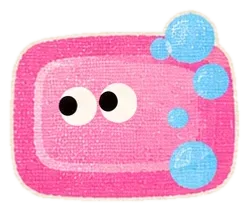 soapend
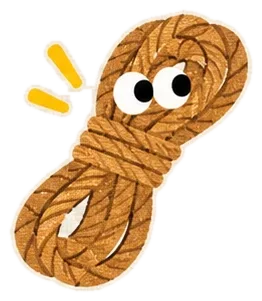 ropeend
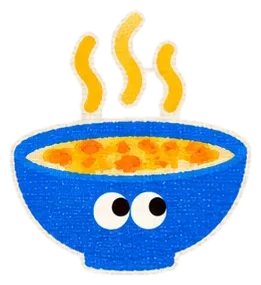 soupend
From heysaylo.com/resources/p-sound-flash-cards. Free to print and use; please don’t sell.
P in longer words
Cut along the dashed lines. The note under each word says where the sound is.
Two-syllable words with P in the middle, then longer words that start with P.
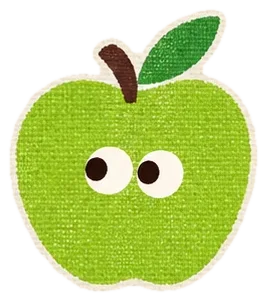 applemiddle
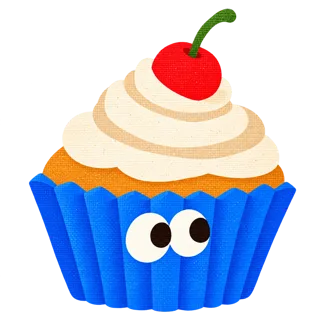 cupcakemiddle
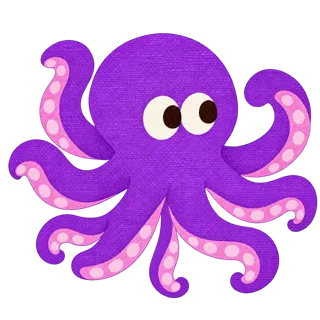 octopusmiddle
From heysaylo.com/resources/p-sound-flash-cards. Free to print and use; please don’t sell.
Ways to play with the cards
- Flip and say. Turn the pile face down. The child flips a card and says the word three to five times, then keeps the card. Count the pile at the end.
- Memory. Print two copies, mix them face down, and turn over two at a time. Say both words on every turn, matched or not.
- Go fish. Print two copies and deal five cards each. Ask “Do you have the ___?”, so every turn is a practice try.
- Hide and find. Hide cards around the room. Each card gets said three times before the next hunt.
- Sort by position. Make three piles: P at the start, in the middle and at the end. Read the note under the word to check.
- Into a sentence. Once single words are steady, put each card into a carrier phrase such as “I see a ___” or “Where is the ___?”
- Feel the puff. At the start of a word, P comes with a little puff of air. Hold a tissue or a feather in front of the lips and watch it move on “pie” and “pig”.
- P or B? Pair cards that differ only in the voice: peach and beach, pie and bye, cap and cab are all in the P and B sets. Say one and have the child point to it. For P and B pairs with pictures, see the voicing sheets in the free minimal pairs word lists and minimal pairs flash cards.
ASHA describes treatment as helping a sound carry over to increasingly challenging levels: syllables, words, phrases and sentences, then conversation (ASHA). These cards are the word level, and the carrier phrase game is a step towards sentences. For more game ideas, see speech practice games.
Choosing which cards to use
You don’t need the whole set at once. In one study of 19 children taught with minimal word pairs, three exemplars were enough for generalization in 59% of cases, some needed five or ten, and a few didn’t generalize even after ten (Elbert, Powell & Swartzlander, 1991). Start with a few cards the child can say well, and add more as accuracy grows.
For a child just starting P, begin with page 1 and the vowels that come easily, then add page 2. Move to page 3 when one-syllable words are steady.
Set a few cards aside and don’t practice them, so you can check every few weeks whether the sound is spreading to words the child hasn’t drilled. For word shape, facilitating contexts and probe words, see how to choose target words for articulation therapy.
Why the first two pages use simple words
Pages 1 and 2 use only one-syllable words with one consonant before or after the vowel (CV, VC and CVC shapes), with no blends and no vocalic R. They’re for children who are just starting to say P in words: very young children, and children with childhood apraxia of speech (CAS) or a severe speech sound disorder. ASHA’s practice portal on CAS lists increasing difficulty with longer or more complex syllables and word shapes among its features, along with vowel errors and disrupted transitions between sounds and syllables (ASHA).
The words are spread over as many different vowels as we could picture. P moves into each vowel a little differently, so one sound across many vowels gives practice of many transitions, not one. ASHA’s speech sound disorders portal notes that some contexts can make a sound easier, such as /t/ before a high front vowel as in “tea” (ASHA). If one vowel is easier for the child, start with those cards and add the others.
Approaches differ. ASHA’s CAS portal describes one program, NDP3, building speech up from single sounds and simple syllables to longer words, while Rapid Syllable Transition Treatment (ReST) practices longer nonsense words from the start (ASHA). The portal also says SLPs choose practice conditions, such as practicing one word many times in a row (blocked) or mixing words (random), and may change them as the child learns (ASHA). Use the cards to fit the approach you’ve chosen.
For more on CAS, see early signs of childhood apraxia of speech, DTTC for childhood apraxia and apraxia vs speech sound disorder.
About the P sound
P is one of the first consonants children learn. In a review of 15 US studies of 18,907 children, P and B were acquired by 90% of children between 2;0 and 2;11 (years;months), with M, N, H, W and D; the review lists the consonants in order of average age, and B comes first (Crowe & McLeod, 2020). P is made with the lips closed and the voice off; B is made the same way with the voice on.
Leaving off the last sound, as in “bu” for bus, is final consonant deletion, and ASHA’s table of phonological patterns gives a likely age of elimination of 3. Dropping a weak syllable, as in “nana” for banana or “tato” for potato, is weak syllable deletion, with a likely age of 4. The table has no age for voicing patterns such as “bie” for pie. Its ages are compiled from clinical texts and can vary widely between children (ASHA).
For patterns and when they usually fade, see phonological processes by age and final consonant deletion therapy. For the timeline across sounds, see speech sounds by age. There’s also a free B sound flash cards set.
How the words were chosen
- Simple shapes first. Every word on pages 1 and 2 is one syllable with one consonant before and after the vowel at most. Words with blends (plate, play, sleep, stop) or vocalic R (pear, park, purse) are left out.
- Many vowels. Page 1 covers ten vowels, from “peach” to “pouch”. No emoji clearly shows a simple P word with the vowel in “boat” or “boot” at the start, so those vowels are on the end page instead (soap, rope, soup, loop).
- By sound, in General American English. For many speakers, “paw” has the same vowel as “pot”. “Cupcake” and “teapot” have P in the middle of the word, where the two syllables meet.
- P, not B. Words with a B sound are left out, so each card practices one sound.
- Everyday words most children aged 2 to 8 know. Swap out any card that doesn’t suit the child.
For longer lists by position, with phrases and sentences, see the free articulation word lists. To track practice at home, add the weekly practice log.
Common questions
What are some simple P words for speech therapy?
Peach, pig, page, pen, pan, pot, pup and pie are one-syllable words with P at the start, each with a different vowel. Up, cup, sheep, ship, map, cap and soap end in P.
What is the difference between P and B?
Both are made with the lips closed and then opened. P has the voice off and B has the voice on, so “pie” and “bye” differ only in the voice. ASHA’s portal describes Metaphon, which teaches voicing as “noisy” (voiced) and “quiet” (voiceless) sounds.
When should a child say P correctly?
P is learned early: in a 2020 review of US studies, 90% of children said P correctly by some point between 2 and 3. Ask an SLP if you’re worried about a child older than that.
Can I print these P cards for my caseload?
Yes. They’re free to print and use with your students and clients and to send home. Please don’t sell them.
Request a resource or send feedback
Want another version of this, or something new? Spotted a mistake? Tell us.
Sources
- ASHA Practice Portal: Speech sound disorders (articulation and phonology).
- ASHA Practice Portal: Childhood apraxia of speech.
- Elbert, M., Powell, T. W., & Swartzlander, P. (1991). Toward a technology of generalization: How many exemplars are sufficient? Journal of Speech and Hearing Research, 34(1), 81–87.
- Crowe, K., & McLeod, S. (2020). Children’s English consonant acquisition in the United States: A review. American Journal of Speech-Language Pathology, 29(4).
- ASHA Practice Portal: Selected phonological patterns.