
Free resource for speech-language pathologists (SLPs)
L words kids actually say: free high-frequency word lists
Updated
How to use it
Most L word lists are built from words that are easy to draw: lemon, leaf, ladybug. Many aren’t words children say every day. These lists start with the L words children use all day, such as look, like, little, all, ball and please, and show how common each one is. Words are sorted by where the L is and ordered from short shapes (look, ball) to longer ones (elephant), with blends last. Start with the cards, use the sheet for the position the child’s speech-language pathologist (SLP) is working on, then move up to the phrases and sentences. The last sheet is for the family’s own words.
How to print
- Pick the pages. Everything is ticked. Untick what you don’t need, or use a shortcut below.
- Press Print. Each page prints on its own sheet of US letter paper.
- Choose your printer in the print window, or “Save as PDF” to keep a copy.
Each word sheet has a Tries column: tick it each time the child says the word, or write a number.
Start here: 12 everyday L words
Six small words children say all day and six things they talk about. Cut along the dashed lines.
 lionL at the start
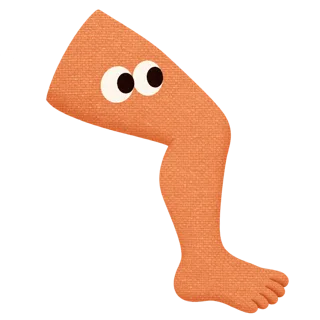 legL at the start
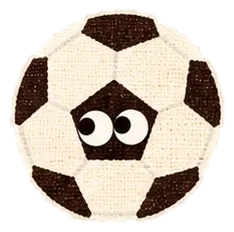 ballL at the end
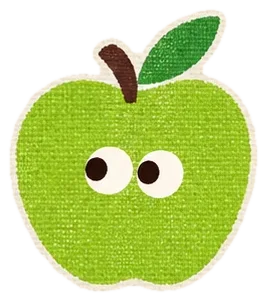 appleL at the end
From heysaylo.com/resources/high-frequency-l-words. Free to print and use; please don’t sell.
Small words with L that kids say all day
Hard to draw, but children say them all day, so getting them right makes a big difference to how well they’re understood. Say them in short phrases: “look at me”, “I like it”, “all gone”.
How common: a percentage is the share of 2½-year-olds who say the word (Wordbank). Dolch marks one of the 220 words children meet most in books (Dolch, 1936).
| Word | Where the L is | How common | Tries |
|---|---|---|---|
| light | Start | 95% · Dolch | |
| love | Start | 90% | |
| look | Start | 87% · Dolch | |
| like | Start | 86% · Dolch | |
| long | Start | 56% · Dolch | |
| little | Start and end | 87% · Dolch | |
| all | End | 74% · Dolch | |
| fall | End | 93% · Dolch | |
| call | End | 86% · Dolch | |
| pull | End | 76% · Dolch | |
| will | End | 50% · Dolch | |
| tell | End | Dolch | |
| old | End blend (LD) | 56% · Dolch | |
| cold | End blend (LD) | 95% · Dolch | |
| help | End blend (LP) | 88% · Dolch | |
| hold | End blend (LD) | 84% · Dolch | |
| hello | Middle | 88% | |
| yellow | Middle | 86% · Dolch | |
| blue | Blend (BL) | 91% · Dolch | |
| play | Blend (PL) | 95% · Dolch | |
| fly | Blend (FL) | Dolch | |
| please | Blend (PL) | 98% · Dolch | |
| sleep | Blend (SL) | 92% · Dolch | |
| clean | Blend (KL) | 91% · Dolch |
Spelled with L, no L sound: walk, talk, chalk, could, would, should and half. They’re left off these sheets, so a child practicing L isn’t asked to say an L that isn’t there.
From heysaylo.com/resources/high-frequency-l-words. Free to print and use; please don’t sell.
L at the start of words
One L before a vowel, with no blend. Shortest shapes first: CVC (look), then CVCC (lunch), then longer words. How common: a percentage is the share of 2½-year-olds who say the word (Wordbank). Dolch marks one of the 220 words children meet most in books (Dolch, 1936).
| Word | Shape | How common | Tries |
|---|---|---|---|
| light | CVC | 95% · Dolch | |
| leg | CVC | 95% | |
| love | CVC | 90% | |
| look | CVC | 87% · Dolch | |
| like | CVC | 86% · Dolch | |
| loud | CVC | 82% | |
| lick | CVC | 70% | |
| lamb | CVC | 66% | |
| long | CVC | 56% · Dolch | |
| let | CVC | Dolch | |
| laugh | CVC | Dolch | |
| lunch | CVCC | 88% | |
| lips | CVCC | 84% | |
| lamp | CVCC | 66% | |
| left | CVCC | Dolch | |
| lion | 2 syllables | 92% | |
| little | 2 syllables | 87% · Dolch | |
| ladder | 2 syllables | 67% | |
| listen | 2 syllables | 65% | |
| later | 2 syllables | 65% | |
| lady | 2 syllables | 61% | |
| lollipop | 3 syllables | 65% |
From heysaylo.com/resources/high-frequency-l-words. Free to print and use; please don’t sell.
L at the end of words
One L after a vowel. L at the end of a word sounds a little different from L at the start, so it can need its own practice; ask the child’s SLP which position to start with. How common: a percentage is the share of 2½-year-olds who say the word (Wordbank). Dolch marks one of the 220 words children meet most in books (Dolch, 1936).
| Word | Shape | How common | Tries |
|---|---|---|---|
| owl | VC | 80% | |
| all | VC | 74% · Dolch | |
| ball | CVC | 99% | |
| bowl | CVC | 95% | |
| fall | CVC | 93% · Dolch | |
| doll | CVC | 88% | |
| pool | CVC | 86% | |
| call | CVC | 86% · Dolch | |
| pull | CVC | 76% · Dolch | |
| full | CVC | 75% · Dolch | |
| will | CVC | 50% · Dolch | |
| school | CCVC | 91% | |
| spill | CCVC | 81% | |
| smile | CCVC | 73% | |
| apple | 2 syllables | 97% | |
| bottle | 2 syllables | 93% | |
| towel | 2 syllables | 92% | |
| table | 2 syllables | 91% | |
| puzzle | 2 syllables | 88% | |
| tickle | 2 syllables | 86% | |
| pencil | 2 syllables | 84% | |
| bicycle | 3 syllables | 96% |
L followed by another consonant at the end, as in “milk” and “help”, is on the blends sheet.
From heysaylo.com/resources/high-frequency-l-words. Free to print and use; please don’t sell.
L in the middle of words
L between two vowels, as in “yellow”, or where two words join, as in “belly button”. Two syllables first, then longer words. How common: a percentage is the share of 2½-year-olds who say the word (Wordbank). Dolch marks one of the 220 words children meet most in books (Dolch, 1936).
| Word | Shape | How common | Tries |
|---|---|---|---|
| balloon | 2 syllables | 98% | |
| pillow | 2 syllables | 94% | |
| hello | 2 syllables | 88% | |
| yellow | 2 syllables | 86% · Dolch | |
| jelly | 2 syllables | 79% | |
| police | 2 syllables | 65% | |
| melon | 2 syllables | 62% | |
| jello | 2 syllables | 62% | |
| telephone | 3 syllables | 96% | |
| elephant | 3 syllables | 95% | |
| vanilla | 3 syllables | 45% | |
| belly button | 4 syllables | 95% | |
| helicopter | 4 syllables | 83% | |
| alligator | 4 syllables | 79% |
From heysaylo.com/resources/high-frequency-l-words. Free to print and use; please don’t sell.
L blends at the start and end of words
L after another consonant at the start of a word, then L before another consonant at the end. In each row, the most common words come first; the percentage is the share of 2½-year-olds who say each one (Wordbank).
| Blend | Words, most common first | Tries |
|---|---|---|
| BL | blanket 96%, block 93%, blue 91%, blow 86%, black 82% | |
| PL | please 98%, play 95%, plate 88%, plant 75% | |
| KL | clean 91%, clock 89%, clap 86%, close 86%, cloud 81%, climb 81%, closet 80%, clown 67% | |
| GL | glasses 84%, glass 79%, gloves 66%, glue 59% | |
| FL | flower 97%, flag 76%, fly (Dolch) | |
| SL | sleep 92%, slide 87%, sleepy 76%, slipper 67%, slow 63%, sled 53% | |
| SPL | splash 84% | |
| In the middle | airplane 97%, butterfly 92%, asleep 85%, necklace 75% | |
| LK, LD (end) | milk 97%, cold 95%, hold 84%, build 76%, old 56% | |
| LP, LT, LF (end) | help 88%, belt 76%, salt 61%, wolf 58%, myself 47% |
From heysaylo.com/resources/high-frequency-l-words. Free to print and use; please don’t sell.
Phrases and sentences
Once single words are steady, move up to these. Every one is built from words on the other sheets and from things families say every day.
| When | Say | Tries |
|---|---|---|
| Any time | look! · I like it · a little · all done · help me · Let’s play! | |
| Snack time | milk, please · an apple · all gone · I like yellow jello. · Can I have a little more? | |
| Getting dressed | my blue shirt · Hold still. · Pull it up. · Look at you! | |
| Going out | Let’s play ball. · Hold my hand. · Slide down! · Look at the plane! | |
| Bath time | bubbles · a blue towel · Splash, splash! · Wash your belly. | |
| Bedtime | my blanket · my pillow · Turn off the light. · Sleep well. · I love you. |
Most phrases mix L at the start, L at the end and L blends. Listen for the kind the child is working on.
From heysaylo.com/resources/high-frequency-l-words. Free to print and use; please don’t sell.
My words: names, places and favorite things
The words that matter most are often the child’s own: their name, a sister, the dog, a favorite snack or toy, words from school. Write L words the child uses at home here, with the family. Ask: Whose names have an L sound? What foods, toys, places and shows does the child talk about?
Child: ____________________ Date: ______________
| Word | Where the L is | Why it matters | Tries |
|---|---|---|---|
From heysaylo.com/resources/high-frequency-l-words. Free to print and use; please don’t sell.
Why start with the words children say most
An L word list is only as useful as its words. Lists built for pictures fill up with words like lemon, leaf and ladybug. In Wordbank, a large open database of parent reports, 99% of 2½-year-olds say “ball” and 98% say “please”, while “lamp” is said by 66% and “lemon”, “leaf” and “ladybug” aren’t on the 680-word checklist at all (Frank et al., 2017).
Words children use every day give practice a purpose, and every correct “look” or “all” is heard. ASHA’s client-specific target selection includes relevance to the child and family, such as a sound in the child’s name, and in the core vocabulary approach the practice words are ones the child uses often in everyday life (ASHA). Gierut’s review recommends high-frequency and late-acquired words as treatment words (Gierut, 2016).
The research on word frequency itself is mixed. Frequent words led to more generalization in one small study (Morrisette & Gierut, 2002, as described in Gierut & Morrisette, 2012), but frequency had no clear effect on its own in a later one, and late-acquired words did better than early ones in another (Gierut & Morrisette, 2012). So treat these lists as a practical starting point, not a guarantee. For the full picture, see choosing target words for articulation.
Our own picture-based L lists include 4 of the 34 Dolch words with an L sound; see the data for five sounds.
The order on these sheets
- Short shapes first. Within each position, words go from CVC (look, ball) to words with two consonants together (lunch, school) and then longer words (lion, elephant).
- One position at a time. Start, end and middle are on separate sheets, so you can practice the position the child’s SLP chooses. Blends have their own sheet, with end blends such as “milk” and “help”.
- Start and end are different jobs. L at the end of a word sounds a little different from L at the start, so it can need its own practice.
- Words before sentences. ASHA describes practice moving from syllables and words to phrases, sentences and conversation (ASHA). The phrases and sentences sheet is the next step up.
- Most children have L by about 4½. In a large review of US studies, 90% of children said L correctly by about 4 years 6 months (Crowe & McLeod, 2020).
- Some SLPs start harder on purpose. The complexity approach picks more complex targets, such as clusters, on the idea that they spark wider generalization (Storkel, 2018). For that, start on the blends sheet.
How the words were chosen
- Wordbank. The percentages come from Wordbank’s American English data for the MacArthur-Bates Communicative Development Inventory (CDI): Words and Sentences, a checklist of 680 words parents fill in. Each is the share of 30-month-olds whose parents reported they say the word (Frank et al., 2017; Frank et al., 2021). Wordbank’s data is shared under a CC BY 4.0 license.
- Dolch. Words marked Dolch are among the 220 “service words”, such as let, tell and laugh, that Dolch found children meet most in books (Dolch, 1936). Many aren’t on the CDI, so they have no percentage.
- By sound, not spelling. Every word was checked against a pronouncing dictionary and by hand for General American English. Words spelled with L but said without one (walk, talk, could, would) are left out, and a double L, as in “yellow” or “ball”, is one L sound.
- Toddler data, older children. The CDI covers children up to 2½, so the percentages show how early and widely a word is used, not how often a 6-year-old says it. They still separate everyday words from rare ones.
- Dialect. ASHA notes that knowing the rules of a child’s dialect is critical in setting expectations for speech sounds (ASHA). Skip any word that doesn’t fit how the child’s family talks.
For more L practice, the free L sound flash cards have picture cards, and the L sound guide covers when children say L and what helps at home. If L turns into W or Y, gliding speech therapy explains the pattern for SLPs.
The same kind of lists are free for high-frequency S words, R words, K words and TH words. For R, see also the R sound flash cards, the R sound practice pack, the R sound guide and, for SLPs, treating the R sound.
Common questions
What are high-frequency L words?
L words children say and hear often, such as “look”, “like” and “ball”. Practicing L in those words means the child uses it in everyday talk, not only in rare words like “ladybug”.
Why are “walk” and “could” missing from these lists?
They’re spelled with L but have no L sound, so they don’t practice L. They’re listed on the small words sheet so you know why.
What do the percentages mean?
Each is the share of 30-month-olds whose parents reported they say the word, from Wordbank’s American English data. A word with no percentage isn’t on that 680-word checklist.
Can parents use these L word lists at home?
Yes, alongside speech therapy. Use the sheet your child’s SLP suggests, keep practice short and friendly, and add your child’s own words on the last sheet.
Request a resource or send feedback
Want another version of this, or something new? Spotted a mistake? Tell us.
Sources
- Frank, M. C., Braginsky, M., Yurovsky, D., & Marchman, V. A. (2017). Wordbank: An open repository for developmental vocabulary data. Journal of Child Language, 44(3), 677–694.
- Frank, M. C., Braginsky, M., Yurovsky, D., & Marchman, V. A. (2021). Variability and consistency in early language learning: The Wordbank project. MIT Press.
- Dolch, E. W. (1936). A basic sight vocabulary. The Elementary School Journal, 36(6), 456–460.
- ASHA Practice Portal: Speech sound disorders (articulation and phonology).
- Gierut, J. A. (2016). Nexus to lexis: Phonological disorders in children. Seminars in Speech and Language, 37(4), 280–290.
- Morrisette, M. L., & Gierut, J. A. (2002). Lexical organization and phonological change in treatment. Journal of Speech, Language, and Hearing Research, 45(1), 143–159.
- Gierut, J. A., & Morrisette, M. L. (2012). Density, frequency and the expressive phonology of children with phonological delay. Journal of Child Language, 39(4), 804–834.
- Gierut, J. A., & Morrisette, M. L. (2012). Age of word acquisition effects in treatment of children with phonological delays. Applied Psycholinguistics, 33(1), 121–144.
- Storkel, H. L. (2018). The complexity approach to phonological treatment: How to select treatment targets. Language, Speech, and Hearing Services in Schools, 49(3), 463–481.
- Crowe, K., & McLeod, S. (2020). Children’s English consonant acquisition in the United States: A review. American Journal of Speech-Language Pathology, 29(4).