
Free resource for speech-language pathologists (SLPs)
Free basic concepts activities for speech therapy
Updated
How to use it
Three picture worksheets, a probe sheet and a page for families. The worksheets cover size and amount (big, little, biggest, more, full, empty), location (in, on, under, next to, behind, in front of, between), and same and different. Read each prompt aloud: the child points to or circles a picture, so you see what they understand, and then you ask them to say it. On the location sheet, every choice in a row shows the same box or table and ball, so only the place changes. The probe sheet lists 24 concepts with a quick way to check each one with blocks and cups. The last page shows families how to use concept words in everyday routines.
How to print
- Pick the pages. Everything is ticked. Untick what you don’t need, or use a shortcut below.
- Press Print. Each page prints on its own sheet of US letter paper.
- Choose your printer in the print window, or “Save as PDF” to keep a copy.
Print the picture sheets for the child, the probe sheet once per child, and the routines page to send home. Slip a picture sheet into a sheet protector to reuse it with a dry-erase marker.
Size and amount
Read each one aloud. The child points to the picture or circles it. Then ask about a picture they didn’t circle: “What about this one?”
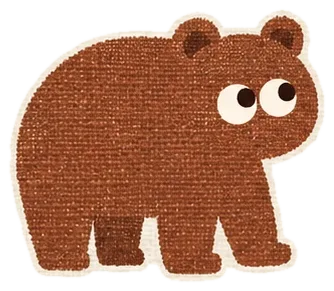
1. Circle the big bear.
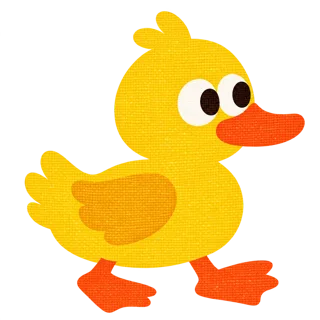
2. Circle the little duck.
3. Circle the biggest star.

4. Circle the box with more cookies.

5. Color the glass that is full.
6. Color the glass that is empty.
7. Circle the box that has none.
From heysaylo.com/resources/basic-concepts-speech-therapy. Free to print and use; please don’t sell.
Where is the ball?
Read each one aloud. The child points to the picture or circles it. Each row has the same things, so only the place changes. Rows 1 to 4 come first; rows 5 to 7 are usually harder. Then ask: “Where is the ball?”
1. Circle the ball that is in the box.
2. Circle the ball that is on the table.
3. Circle the ball that is under the table.
4. Circle the ball that is next to the box.
5. Circle the ball that is behind the box.
6. Circle the ball that is in front of the box.
7. Circle the ball that is between the boxes.
From heysaylo.com/resources/basic-concepts-speech-therapy. Free to print and use; please don’t sell.
Same and different
Read each one aloud. The child circles the answer. Rows 3, 5 and 6 are harder: the pictures differ only in size, color or the way they face. Ask: “How do you know?”
1. Circle the two that are the same.
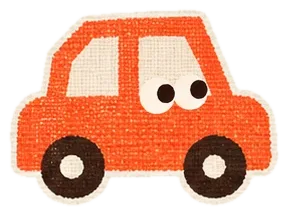

2. Circle the two that are the same.
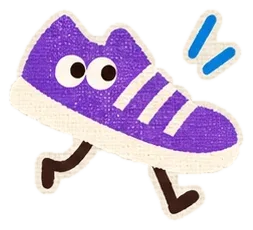

3. Circle the two that are the same.
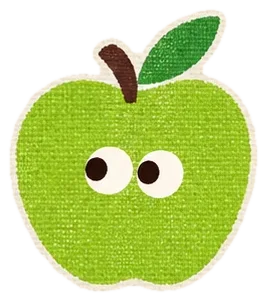
4. Circle the one that is different.
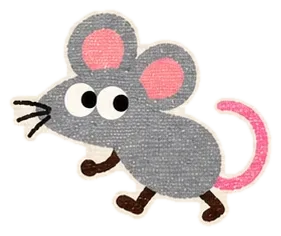
5. Circle the one that is different.
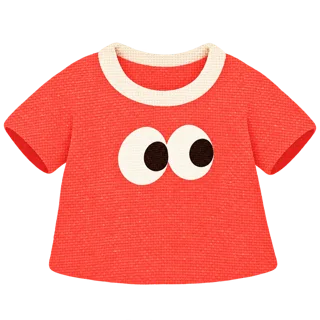
6. Circle the one that is different.

From heysaylo.com/resources/basic-concepts-speech-therapy. Free to print and use; please don’t sell.
Basic concepts probe
Child: ____________________ Date: ______________ Language: ______________
Shows (understands): do the Try it with real objects; the child shows you. Says: set it up and ask “Where is it?” or “Which one?” without saying the word. Mark ✓ (on the first try), ~ (with a cue) or − (not yet). For a pair, mark ✓ only when the child gets both words.
| Kind | Concept | Try it | Shows | Says | Notes |
|---|---|---|---|---|---|
| Where | in | “Put the block in the cup.” | |||
| Where | on | “Put the block on the box.” | |||
| Where | under | “Put the block under the cup.” | |||
| Where | next to | “Put the block next to the box.” | |||
| Where | behind | “Put the block behind the box.” | |||
| Where | in front of | “Put the block in front of the box.” | |||
| Where | between | “Put the block between the cups.” | |||
| Where | top / bottom | “Touch the top of the page.” “The bottom?” | |||
| Size | big / little | “Give me the big block.” “The little one?” | |||
| Size | tall / short | Two towers. “Which is tall?” “Short?” | |||
| Amount | more | Two piles of blocks. “Which has more?” | |||
| Amount | less | Two cups of water. “Which has less?” | |||
| Amount | full / empty | “Give me the empty cup.” “The full one?” | |||
| Amount | all | “Give me all the blocks.” | |||
| Amount | some | “Give me some blocks.” (Not all.) | |||
| Amount | none | Two cups, one empty. “Which has none?” | |||
| Order | first / last | 4 toys in a line. “Touch the first.” “The last?” | |||
| Time | before | “Touch your nose before you clap.” | |||
| Time | after | “After you clap, touch your nose.” | |||
| Compare | same | “Find one that is the same as this.” | |||
| Compare | different | 3 toys. “Which one is different?” | |||
| Quality | hot / cold | Pictures. “Which one is cold?” “Hot?” | |||
| Quality | wet / dry | Two paper towels. “Give me the wet one.” | |||
| Quality | soft / hard | Cotton ball, block. “Which is soft?” |
From heysaylo.com/resources/basic-concepts-speech-therapy. Free to print and use; please don’t sell.
Basic concepts in everyday routines
Basic concepts are words for where things are, how big, how much, when, and how things compare. Children hear them all day. Pick one or two words a week, with your child’s speech-language pathologist (SLP), and use them in these routines.
| Routine | Words to use | Try saying |
|---|---|---|
| Getting dressed | on, off, in, first, last, same, different | “Arm in. Now the other arm.” “Shoes on last.” “Are your socks the same?” |
| Meals and snacks | more, less, full, empty, all, none, hot, cold | “Your cup is empty. More?” “Careful, it’s hot.” “All gone, none left.” |
| Bath time | in, out, wet, dry, full, empty, under | “Ducks in the water.” “Hands under the tap.” “Wet hair, now dry hair.” |
| Tidying up | in, on, under, next to, behind, top, bottom | “Blocks in the box.” “Book on the shelf.” “Is a car under the couch?” |
| Cooking together | first, next, before, after, full, some, more | “First the flour, then the eggs.” “Fill the cup to the top.” |
| Outside and walks | big, little, tall, short, up, down, behind | “A big dog and a little dog.” “That tree is tall.” “Who’s behind us?” |
| Getting in the car or bus | in, front, back, next to, first, last | “You sit in the back.” “Who gets in first?” “I’m next to you.” |
| Bedtime | before, after, under, soft, on, off | “Teeth before stories.” “Under the blanket.” “Lights off.” |
- Say it while it happens. “The spoon is in the cup” means most when the child can see it.
- Show it with real things, and with your child’s own body: “Hands on your head!” Then use pictures and books.
- Use both words of a pair. Big makes sense next to little, and full next to empty.
- Let your child tell you. Hide a toy and ask, “Where is it?” Give a choice if they need one: “On the chair or under the chair?”
- Use your home language. These words can be learned in any language your family speaks.
From heysaylo.com/resources/basic-concepts-speech-therapy. Free to print and use; please don’t sell.
What basic concepts are
Basic concepts are the small words for relationships: where something is (in, under, between), how big it is, how much there is (more, full, none), when it happens (before, after, first), and how things compare (same, different). Children need them to follow directions and to describe what they see.
ASHA lists basic concept vocabulary among the semantic goals for preschoolers with a spoken language disorder (ASHA). Its milestones give a rough order: at 3 to 4 years, children compare things with words like bigger or shorter and use more location words, such as inside, on and under; at 4 to 5, they understand and use behind, beside and between, and use more time words, like yesterday and tomorrow, correctly (ASHA). Children vary, so treat these as a rough guide.
These words are tricky because they shift with the situation. Ann Boehm, who wrote the Boehm test, points out that the tallest animal in one group may be the shortest in another, and that understanding a concept in one setting, such as space, doesn’t mean a child understands it in another, such as time (Boehm, 2013).
What the published tests cover
Two tests are widely used to assess basic concepts. They’re described here at a high level only; none of their items are on these sheets, and these sheets aren’t a test.
- Boehm-3 Preschool. Measures 26 basic relational concepts for ages 3:0 to 5:11 (Pearson). Each concept is checked twice, and the child points to one of four pictures (Boehm, 2013). The school-age Boehm-3 covers 50 concepts from kindergarten to second grade curricula and teachers’ directions (Boehm, 2013).
- Bracken Basic Concept Scale, Fourth Edition: Receptive (BBCS-4:R). Ages 3:0 to 7:11. More than 280 concepts across 10 subtests: colors, letters, numbers and counting, sizes and comparisons, shapes, self- and social awareness, direction and position, texture and material, quantity, and time and sequence (Pearson). A separate expressive scale lets you compare understanding with use.
The probe sheet here borrows those broad groups (where, size, amount, order and time, comparing, and qualities such as hot and cold) so your informal data lines up with what a formal test reports.
How to run the sheets
- Understanding first, then saying. The child points or circles to show they understand. Then ask about another picture (“Where is this ball?”) to hear them use the word.
- Real things before pictures. Act it out first: put a ball in a box, sit under a table. Boehm suggests starting with the child’s own body and real objects, then moving to pictures (Boehm, 2013).
- Change the objects. If a child knows “under the table”, try under a cup, a blanket and a chair, so the word isn’t tied to one picture.
- Watch the order of words. “Before” and “after” are hard for young children, especially when the order you say things isn’t the order they happen (Blything et al., 2015). The following directions activities have in-order and reversed before and after directions.
- Make it easier: two choices instead of three, or model the answer and ask again. Harder: cover the prompt and ask the child to give you a direction, or combine two concepts (“the big ball under the table”).
Tracking progress
- Probe before you teach. Run the probe sheet, then pick two or three concepts the child doesn’t know yet.
- Keep some probes untaught. Use different objects to probe than you use to teach, so you can tell learning from memorizing.
- Note the cues. A ✓ with pointing isn’t the same as a ✓ from words alone. Use the ~ mark and the notes column.
- Involve the family. ASHA describes family-centered intervention and practice built into everyday activities (ASHA). Send home the routines page with the week’s words circled.
For opposites with pictures, see the free opposites flash cards. For location words in a busy picture, try Silly Scene Detective. For more on understanding versus using words, see receptive vs expressive language.
Common questions
What are basic concepts in speech therapy?
Words for relationships: where things are (in, under, behind), size (big, little), amount (more, full, none), time and order (before, first) and comparing (same, different). Speech-language pathologists (SLPs) teach them because children need them to follow directions and describe things.
Which basic concepts should I teach first?
Start with what the child needs in daily routines and what the probe shows they don’t know. ASHA’s milestones list inside, on and under before behind, beside and between, but children vary.
Is the probe sheet a standardized test?
No. It’s an informal checklist with no norms. Tests such as the Boehm-3 Preschool and the Bracken Basic Concept Scale are standardized; this sheet helps you pick targets and track progress between tests.
Can parents use these worksheets at home?
Yes, alongside speech therapy. The routines page shows families how to use concept words while dressing, eating, bathing and tidying up, which is where children hear them most.
Request a resource or send feedback
Want another version of this, or something new? Spotted a mistake? Tell us.
Sources
- ASHA Practice Portal: Spoken language disorders.
- ASHA: Communication milestones: 3 to 4 years.
- ASHA: Communication milestones: 4 to 5 years.
- Pearson: Boehm-3 Preschool (Boehm Test of Basic Concepts, Third Edition: Preschool), by A. E. Boehm. Product page.
- Boehm, A. E. (2013). Basic concepts as building blocks to school success: Assessment to intervention using the Boehm Test of Basic Concepts-Third Edition (Boehm-3) (White paper). Pearson.
- Pearson Assessments: Bracken Basic Concept Scale, Fourth Edition: Receptive (BBCS-4:R), by B. A. Bracken. Product page.
- Blything, L. P., Davies, R., & Cain, K. (2015). Young children’s comprehension of temporal relations in complex sentences: The influence of memory on performance. Child Development, 86(6), 1922–1934.