
Free resource for speech-language pathologists (SLPs)
Free printable S sound practice pack, from syllables to stories
Updated
How to use it
Seven sheets that take S up the articulation hierarchy, each on its own page. Sheet 1 has placement cues and shaping routes for frontal and lateral lisps. Then come syllables, words, phrases and sentences sorted by context, from S before “ee” to three-sound blends, two short stories, and a self-check where the child rates their own S next to yours. Every S is a true S: plurals that end in a Z sound are left out, and the words don’t repeat the free articulation word lists.
How to print
- Pick the pages. Everything is ticked. Untick what you don’t need, or use a shortcut below.
- Press Print. Each page prints on its own sheet of US letter paper.
- Choose your printer in the print window, or “Save as PDF” to keep a copy.
S: cues and where to start
For the SLP, or a parent the SLP has shown. First listen for the kind of error. In a frontal lisp, S sounds like TH. In a lateral or “slushy” S, air escapes over the side of the tongue; that isn’t a usual stage of development, so it needs an SLP’s plan rather than home practice alone (Whittington Health NHS Trust).
What a good S needs. Teeth together or nearly together, the tongue behind the top front teeth, the sides of the tongue sealed against the upper side teeth, and a thin stream of air down a groove in the middle of the tongue. Tongue tip up or tongue tip down both work: keep whichever gives a clear S sooner.
- Tongue hidden: check in a mirror. You shouldn’t see the tongue; if it pokes out, S turns into TH.
- Air down the middle: trace a finger straight out from the middle of the lips to show where the air goes.
- Soft and small: a quiet, thin snake sound, not a loud hiss.
- Shape from T: say “t-t-t-t” quickly and stretch the last one into S: “t-t-t-tsss”.
- T + S endings: say a word ending in T, then add S: “boat” to “boats”, “hat” to “hats”. These endings really are S, because they come after T.
- Shape from “ee”: say “ee”, then slowly close the teeth and turn the voice off.
- Shape from TH (for a frontal lisp): hold a long TH and slowly pull the tongue back behind the teeth.
- Start here: S before “ee” (see, seed) and T + S endings (eats, boats).
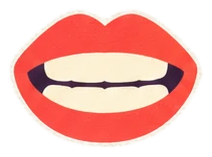
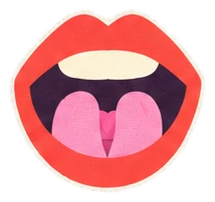
From heysaylo.com/resources/s-sound-practice-pack. Free to print and use; please don’t sell.
S syllables by vowel
Syllables are spelled to match the key word in the first column: “sa” is said like the start of “sat”. Start with the rows marked ◆, and with the last column if T helps this child. Keep each S a hiss, never a buzz.
| Vowel | S first | S between vowels | T + S at the end |
|---|---|---|---|
| ◆ ee, as in “see” | see | ee-see | eets |
| ◆ i, as in “sit” | sih | ih-sih | its |
| ay, as in “day” | say | ay-say | ates |
| e, as in “bed” | seh | eh-seh | ets |
| a, as in “cat” | sa | a-sa | ats |
| ah, as in “hot” | sah | ah-sah | ots |
| uh, as in “cup” | suh | uh-suh | uts |
| eye, as in “my” | sigh | eye-sigh | ites |
| oh, as in “go” | so | oh-so | oats |
| oo, as in “moon” | soo | oo-soo | oots |
- Long S first: hold “sssss” for a slow count of three, then open into the vowel: “sssss-ee”.
- S at the end without T: once T + S is easy, drop the T: eess, iss, ace, ess, ice.
From heysaylo.com/resources/s-sound-practice-pack. Free to print and use; please don’t sell.
S words by context
Every word has a true S sound. Regular plurals appear only where the ending follows T, P or K, as in “boats”, because those endings are S, not Z. Rows marked ◆ are contexts that may help.
| Context | Words |
|---|---|
| ◆ S + ee or i | seed, seat, sip, sink, silly, sister, ceiling, seesaw |
| S + other vowels | salad, sandwich, soccer, circus, sausage, saddle, sunny, soft |
| S + oo or oh | suit, super, suitcase, sew, soda, soak |
| S in the middle | lasso, icy, racing, tossing, dancer, listen, officer, pacifier |
| S at the end | octopus, walrus, lettuce, dice, mice, race, yes, purse |
| ◆ T + S | boats, kites, hats, nuts, beets, pizza (T + S in the middle) |
| ST at the start | stamp, stick, stove, stool, stem, sticky |
| SP and SK at the start | sponge, space, spill, spin, sky, skip, skirt, scarf |
| SM and SN | small, smell, smoke, smooth, snack, snow, sniff, snowman |
| SL and SW | slow, slip, sleeve, slug, sweet, swan, sweep, sweater |
| ST and SK at the end | toast, vest, fist, list, desk, ask, tusk |
| KS and PS at the end | box, fox, six, wax, lips, cups |
| STR, SPR, SPL, SKW and SKR | straw, street, spring, spray, splash, squirrel, square, scrub |
| Two or more S sounds | sauce, slice, science, sunset, sixteen, spaceship, bus stop |
From heysaylo.com/resources/s-sound-practice-pack. Free to print and use; please don’t sell.
S phrases
Three short phrases for each context, in the same order as the word sheet. Say each phrase three times, then mix them up.
| Context | Phrase | Phrase | Phrase |
|---|---|---|---|
| S + ee or i | a big seed | sit on the seat | a silly seesaw |
| S + other vowels | kick the soccer ball | a sunny day | soft sand |
| S + oo or oh | pack the suitcase | super fast | sew a button |
| S in the middle | listen to me | a police officer | an icy hill |
| S at the end | a big octopus | roll the dice | win the race |
| T + S | two hats | boats on the lake | a hot pizza |
| ST | a sticky stamp | a hot stove | sit on the stool |
| SP and SK | a wet sponge | a blue sky | skip and spin |
| SM and SN | a small snack | smell the soup | a snowman in the snow |
| SL and SW | a sweet treat | slow down | a white swan |
| End blends | jam on toast | a messy desk | a fox in a box |
| Three-sound blends | a long straw | splash in the water | a squirrel in the street |
| Two or more S sounds | a slice of pizza | pass the sauce | a spaceship in space |
From heysaylo.com/resources/s-sound-practice-pack. Free to print and use; please don’t sell.
S sentences
Two sentences for each context. Read them together, then have the child say them without looking.
| Context | Sentence | Sentence |
|---|---|---|
| S + ee or i | My sister sat on the seesaw. | Plant a seed in the sun. |
| S + other vowels | We ate salad and a sandwich. | Kick the soccer ball to me. |
| S + oo or oh | Put your suit in the suitcase. | Can you sew on a button? |
| S in the middle | The police officer helped us. | Listen to the dancer sing. |
| S at the end | The octopus ate the lettuce. | Roll the dice and race to the end. |
| T + S | We packed hats and kites. | Two boats float on the lake. |
| ST, SP and SK | Don’t touch the hot stove. | Look up at the sky. |
| SM and SN | We made a small snowman. | I can smell a snack. |
| SL and SW | The white swan swam slowly. | Slip on your sweater. |
| End blends | The fox sat in a box. | I ate toast at my desk. |
| Three-sound blends | A squirrel ran across the street. | We splash in the spring rain. |
| Two or more S sounds | We saw the sunset at six. | Can I have a slice with sauce? |
From heysaylo.com/resources/s-sound-practice-pack. Free to print and use; please don’t sell.
S stories
Read each story aloud together, one sentence at a time if that helps. Then the child retells it and answers the questions. Listen for S at the start, middle and end of words, and in blends.
The sandcastle. On a sunny Saturday, my sister and I went to the seaside. We set up our stuff on the soft sand and started a sandcastle. With a bucket, I made six towers, and my sister made a moat with a spoon. A small crab came to see us. It sat on a rock and watched. Then a big wave splashed over the castle! The towers slid into the sea. My sister laughed so hard she got the hiccups. We didn’t mind. We just started again, a little farther from the sea. By sunset, our castle was the best on the beach.
The missing socks. Every morning, my little brother can’t find a sock. Last Sunday, we searched the whole house. I looked under the sofa and behind the desk. Dad checked the laundry basket, but it was empty. Then we heard a soft scratching sound. It came from the cat’s bed in the kitchen. Our cat was asleep on a nest of socks! There were seven socks, a mitten and a sponge. My brother laughed and said, “Silly cat!” Now we keep a box for socks next to the door, and the cat has a new toy mouse instead.
- What did they build at the seaside, and what happened to it?
- What would you build or do at the seaside?
- Where were the missing socks, and what else was there?
- Tell me about something you lost. Where did you find it?
From heysaylo.com/resources/s-sound-practice-pack. Free to print and use; please don’t sell.
S self-check
Name: ____________________ Date: ______________
Say a word, phrase or sentence from your sheets and write it down. Then rate your S: ✓ for a clear S, ~ for almost, ✗ for not yet. Your SLP or a grown-up rates it too. Do your ratings match?
Before you rate, check: Were my teeth together? Was my tongue hiding behind my teeth? Did the air go down the middle, not out the sides? Did it sound like a quiet snake?
| # | What I said | My rating (✓ ~ ✗) | SLP or grown-up’s rating |
|---|---|---|---|
| 1 | |||
| 2 | |||
| 3 | |||
| 4 | |||
| 5 | |||
| 6 | |||
| 7 | |||
| 8 | |||
| 9 | |||
| 10 |
We matched: ______ out of 10 times. Next time I’ll practice: ____________________
From heysaylo.com/resources/s-sound-practice-pack. Free to print and use; please don’t sell.
How this pack climbs the hierarchy
ASHA describes speech sound treatment in stages: establishing the sound, then generalizing it at increasingly challenging levels, from syllables and words to phrases, sentences and conversation, then maintaining it, with self-monitoring and self-correction (ASHA). The sheets follow that order, from cues (sheet 1) to syllables, words, phrases, sentences, two stories and a self-check.
Each level is sorted by the same contexts, so a child who can say S before “ee” can practice that context in phrases and sentences before moving to harder ones. For the full ladder, see the articulation hierarchy; for more S words by position, see the free articulation word lists.
Where the cues and shaping routes come from
The cues follow the evidence summary in lisp speech therapy:
- Know the error first. A frontal lisp is common until about age 5 and part of typical development; a lateral lisp isn’t (Whittington Health NHS Trust). In a review of US studies, S was acquired by 4;0–4;11 at a 90% criterion (Crowe & McLeod, 2020).
- Tip up or tip down. Typical speakers use both, with no audible difference, and the same authors note a speaker’s S is easier to correct in the direction of their natural preference (Stone et al., 2019).
- Groove and seal. S is among the sounds that need a midline groove in the tongue (Preston et al., 2017). A university clinical handout describes the sides of the tongue against the upper teeth, with the air directed straight out through the constriction (Fort Hays State University).
- Shaping and contexts. The routes from T, from “ee” and from TH, the T + S endings such as “boat” to “boats”, S before a high front vowel, the finger cue down the midline and the “soft and small” cue all come from the same handout, which draws on standard elicitation texts (Fort Hays State University). They’re clinical techniques, not tested protocols: we found no studies comparing ways of eliciting S.
Why there are no Z plurals
The sheets are sorted by sound. A plural or verb ending after a voiced sound is pronounced Z (dogs, bees, runs), so those words aren’t on the S lists, and Z sounds in the stories aren’t S practice. Endings after T, P and K are pronounced S (boats, cups, socks), so a few appear, mainly in the T + S row that the shaping routes use.
Some everyday words hide a Z sound too, such as “is”, “has”, “please” and “closet”. The phrases and sentences avoid them where they can. For Z practice, see the Z sound guide.
Using the self-check sheet
Writing the child’s rating next to yours shows whether they can judge their own S yet. The evidence for self-monitoring is mixed but relevant here. In 7 children substituting TH for S and Z, self-monitoring outside the clinic led to rapid, widespread generalization, while self-monitoring only in the clinic didn’t (Koegel et al., 1988). A replication with 8 school-age children with S or R errors didn’t find the same effect (Gray & Shelton, 1992).
Self-rating works best once the child makes S reliably in structured practice. More in improving articulation carryover.
A note on lateral lisps
The word, phrase and sentence sheets work for a lateral lisp once the child makes S with air down the middle. Getting that central airflow comes first, with the child’s SLP. The published evidence on lateral lisps is mostly case studies, some using electropalatography or ultrasound; see lisp speech therapy and the parent guide to the lateral lisp.
Common questions
Where should S practice start?
A university clinical handout suggests S before a high front vowel, as in “see”, and words ending in T + S, as in “boats”, because T helps S. Shaping from T or from “ee” are common ways in.
Should the tongue tip be up or down for S?
Either. Tip-up and tip-down S sound the same and both are common in typical speakers, so use whichever gives the child a clear S more easily.
Why aren’t plurals like “dogs” on an S list?
Because the ending in “dogs” is a Z sound. Endings after T, P and K, as in “boats”, are true S sounds, so a few of those are included.
Can this S pack be used for a lateral lisp?
Yes, once the child can make S with air down the middle. A lateral lisp isn’t a usual stage of development, so central airflow should be taught first, with the child’s SLP.
Request a resource or send feedback
Want another version of this, or something new? Spotted a mistake? Tell us.
Sources
- ASHA Practice Portal: Speech sound disorders (articulation and phonology).
- Whittington Health NHS Trust: Lisps.
- Crowe, K., & McLeod, S. (2020). Children’s English consonant acquisition in the United States: A review. American Journal of Speech-Language Pathology, 29(4).
- Stone, M., Gomez, A. D., Zhuo, J., Tchouaga, A. L., & Prince, J. L. (2019). Quantifying tongue tip shape in apical and laminal /s/: Contributions of palate shape. Journal of Speech, Language, and Hearing Research, 62(9), 3149–3159.
- Preston, J. L., McAllister Byun, T., Boyce, S. E., Hamilton, S., Tiede, M., Phillips, E., Rivera-Campos, A., & Whalen, D. H. (2017). Ultrasound images of the tongue: A tutorial for assessment and remediation of speech sound errors. Journal of Visualized Experiments, 119, e55123.
- Fort Hays State University, Department of Communication Sciences and Disorders: Teaching the /s/ sound (clinical workshop handout prepared by school-based SLPs, drawing on Secord et al., 2007, and Bleile, 2006).
- Koegel, R. L., Koegel, L. K., Van Voy, K., & Ingham, J. C. (1988). Within-clinic versus outside-of-clinic self-monitoring of articulation to promote generalization. Journal of Speech and Hearing Disorders, 53(4). ERIC record.
- Gray, S. I., & Shelton, R. L. (1992). Self-monitoring effects on articulation carryover in school-age children. Language, Speech, and Hearing Services in Schools, 23(4).