Free multisyllabic word lists for speech therapy
Updated
How to use it
Word lists and picture cards for long words, made for a speech-language pathologist (SLP) working on weak syllable deletion, childhood apraxia of speech (CAS) or older children who still stumble on long words. There are lists of 2-, 3-, 4-, 5- and 6-syllable words, each sorted by which syllable is stressed, so you can pick words that start with a weak syllable (ba·NA·na) or a strong one (EL·e·phant). Every word is split into syllables with the stressed one in capitals. Then come three pages of picture cards, a page that builds 12 words one syllable at a time, phrases and sentences, and a blank practice and data sheet. Syllable counts and stress were checked by sound in General American English, not spelling.
How to print
- Pick the pages. Everything is ticked. Untick what you don’t need, or use a shortcut below.
- Press Print. Each page prints on its own sheet of US letter paper.
- Choose your printer in the print window, or “Save as PDF” to keep a copy.
Print the card pages on card stock if you can, and two copies for memory match. The word lists and build-up page are for you; the cards and the sentence page are for the child.
Two-syllable words: strong-weak and weak-strong
Most two-syllable English words have a strong-weak pattern, like rabbit. In weak-strong words, like giraffe, the weak syllable comes first, and that’s the one young children tend to drop (“raffe”). Compound words are two short words joined, a good place to start clapping. The stressed syllable is in BOLD CAPITALS: say it a little louder and longer. Syllable breaks follow the spelling where they can, so say each part the way it sounds in the whole word.
| # | Strong-weak | Weak-strong | Compound words |
|---|---|---|---|
| 1 | rabbit (RAB·bit) | giraffe (gi·RAFFE) | cupcake (CUP·cake) |
| 2 | monkey (MON·key) | balloon (bal·LOON) | rainbow (RAIN·bow) |
| 3 | tiger (TI·ger) | guitar (gui·TAR) | snowman (SNOW·man) |
| 4 | apple (AP·ple) | canoe (ca·NOE) | toothbrush (TOOTH·brush) |
| 5 | baby (BA·by) | hotel (ho·TEL) | popcorn (POP·corn) |
| 6 | cookie (COOK·ie) | shampoo (sham·POO) | cowboy (COW·boy) |
| 7 | pencil (PEN·cil) | police (po·LICE) | football (FOOT·ball) |
| 8 | turtle (TUR·tle) | machine (ma·CHINE) | sunshine (SUN·shine) |
| 9 | zebra (ZE·bra) | dessert (des·SERT) | mailbox (MAIL·box) |
| 10 | pizza (PIZ·za) | kazoo (ka·ZOO) | pancake (PAN·cake) |
| 11 | button (BUT·ton) | cartoon (car·TOON) | starfish (STAR·fish) |
| 12 | carrot (CAR·rot) | parade (pa·RADE) | backpack (BACK·pack) |
| 13 | chicken (CHICK·en) | garage (ga·RAGE) | |
| 14 | puppy (PUP·py) | today (to·DAY) | |
| 15 | rocket (ROCK·et) | hello (hel·LO) | |
| 16 | window (WIN·dow) | alarm (a·LARM) |
From heysaylo.com/resources/multisyllabic-words-speech-therapy. Free to print and use; please don’t sell.
Three-syllable words
Sorted by which syllable is stressed. Words with stress on the 2nd syllable start with a weak syllable, so they’re the ones most often shortened: “nana” for banana, “puter” for computer. The stressed syllable is in BOLD CAPITALS: say it a little louder and longer. Syllable breaks follow the spelling where they can, so say each part the way it sounds in the whole word.
| # | Stress on the 1st | Stress on the 2nd | Stress on the 3rd |
|---|---|---|---|
| 1 | elephant (EL·e·phant) | banana (ba·NA·na) | kangaroo (kan·ga·ROO) |
| 2 | butterfly (BUT·ter·fly) | tomato (to·MA·to) | violin (vi·o·LIN) |
| 3 | dinosaur (DI·no·saur) | potato (po·TA·to) | afternoon (af·ter·NOON) |
| 4 | octopus (OC·to·pus) | computer (com·PU·ter) | lemonade (lem·on·ADE) |
| 5 | ladybug (LA·dy·bug) | spaghetti (spa·GHET·ti) | tambourine (tam·bou·RINE) |
| 6 | lollipop (LOL·li·pop) | gorilla (go·RIL·la) | referee (ref·er·EE) |
| 7 | pineapple (PINE·ap·ple) | umbrella (um·BREL·la) | volunteer (vol·un·TEER) |
| 8 | hamburger (HAM·bur·ger) | volcano (vol·CA·no) | engineer (en·gi·NEER) |
| 9 | bicycle (BI·cy·cle) | tornado (tor·NA·do) | understand (un·der·STAND) |
| 10 | crocodile (CROC·o·dile) | flamingo (fla·MIN·go) | disappear (dis·ap·PEAR) |
| 11 | unicorn (U·ni·corn) | mosquito (mos·QUI·to) | |
| 12 | basketball (BAS·ket·ball) | koala (ko·A·la) | |
| 13 | hospital (HOS·pi·tal) | pajamas (pa·JA·mas) | |
| 14 | animal (AN·i·mal) | magician (ma·GI·cian) |
From heysaylo.com/resources/multisyllabic-words-speech-therapy. Free to print and use; please don’t sell.
Four-syllable words
Sorted by which syllable is stressed. The last columns have more school words, for older children. The stressed syllable is in BOLD CAPITALS: say it a little louder and longer. Syllable breaks follow the spelling where they can, so say each part the way it sounds in the whole word.
| # | Stress on the 1st | Stress on the 2nd | Stress on the 3rd |
|---|---|---|---|
| 1 | watermelon (WA·ter·mel·on) | thermometer (ther·MOM·e·ter) | avocado (av·o·CA·do) |
| 2 | helicopter (HEL·i·cop·ter) | harmonica (har·MON·i·ca) | macaroni (mac·a·RO·ni) |
| 3 | caterpillar (CAT·er·pil·lar) | binoculars (bi·NOC·u·lars) | pepperoni (pep·per·O·ni) |
| 4 | motorcycle (MO·tor·cy·cle) | accordion (ac·COR·di·on) | armadillo (ar·ma·DIL·lo) |
| 5 | television (TEL·e·vi·sion) | tarantula (ta·RAN·tu·la) | ukulele (u·ku·LE·le) |
| 6 | elevator (EL·e·va·tor) | experiment (ex·PER·i·ment) | celebration (cel·e·BRA·tion) |
| 7 | calculator (CAL·cu·la·tor) | spectacular (spec·TAC·u·lar) | graduation (grad·u·A·tion) |
| 8 | alligator (AL·li·ga·tor) | ridiculous (ri·DIC·u·lous) | information (in·for·MA·tion) |
| 9 | salamander (SAL·a·man·der) | geography (ge·OG·ra·phy) | transportation (trans·por·TA·tion) |
| 10 | dandelion (DAN·de·li·on) | community (com·MU·ni·ty) | constellation (con·stel·LA·tion) |
| 11 | kindergarten (KIN·der·gar·ten) | invitation (in·vi·TA·tion) | |
| 12 | dictionary (DIC·tion·ar·y) | ||
| 13 | jack-o’-lantern (JACK·o·lan·tern) |
From heysaylo.com/resources/multisyllabic-words-speech-therapy. Free to print and use; please don’t sell.
Five- and six-syllable words
For older children who still drop or swap syllables in long words. The school words come up in science, math and reading. The stressed syllable is in BOLD CAPITALS: say it a little louder and longer. Syllable breaks follow the spelling where they can, so say each part the way it sounds in the whole word.
| # | Fun words | School words |
|---|---|---|
| 1 | hippopotamus (hip·po·POT·a·mus) | electricity (e·lec·TRIC·i·ty) |
| 2 | tyrannosaurus (ty·ran·no·SAU·rus) | vocabulary (vo·CAB·u·lar·y) |
| 3 | refrigerator (re·FRIG·er·a·tor) | university (u·ni·VER·si·ty) |
| 4 | cafeteria (caf·e·TER·i·a) | multiplication (mul·ti·pli·CA·tion) |
| 5 | auditorium (au·di·TOR·i·um) | evaporation (e·vap·o·RA·tion) |
| 6 | abracadabra (ab·ra·ca·DAB·ra) | precipitation (pre·cip·i·TA·tion) |
| 7 | imagination (i·mag·i·NA·tion) | photosynthesis (pho·to·SYN·the·sis) |
| 8 | unbelievable (un·be·LIEV·a·ble) | opportunity (op·por·TU·ni·ty) |
| 9 | curiosity (cu·ri·OS·i·ty) | communication (com·mu·ni·CA·tion) |
Six syllables: encyclopedia (en·cy·clo·PE·di·a), responsibility (re·spon·si·BIL·i·ty), biodiversity (bi·o·di·VER·si·ty).
From heysaylo.com/resources/multisyllabic-words-speech-therapy. Free to print and use; please don’t sell.
Picture cards: three syllables, strong first beat
Cut along the dashed lines. The note under each word splits it into syllables, with the stressed one in capitals.
All 12 have the stress on the 1st syllable, like EL·e·phant.
The pictures are emoji, so they look a little different on each phone, computer and printer. Print in color if you can.
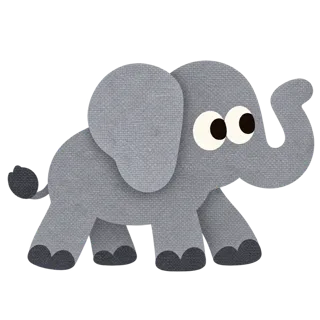 elephantEL·e·phant
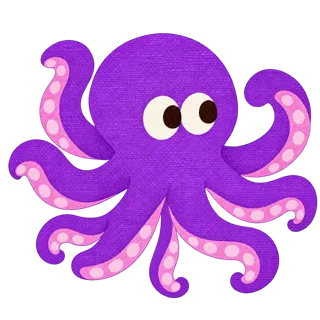 octopusOC·to·pus
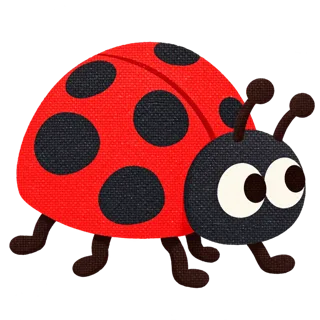 ladybugLA·dy·bug
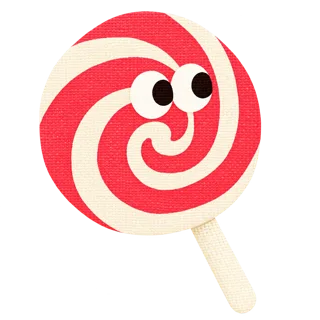 lollipopLOL·li·pop
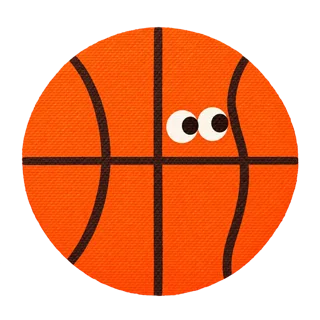 basketballBAS·ket·ball
From heysaylo.com/resources/multisyllabic-words-speech-therapy. Free to print and use; please don’t sell.
Picture cards: three syllables, weak first beat
Cut along the dashed lines. The note under each word splits it into syllables, with the stressed one in capitals.
All 12 start with a weak syllable, like ba·NA·na: the words for weak syllable deletion. Listen for the first beat.
The pictures are emoji, so they look a little different on each phone, computer and printer. Print in color if you can.
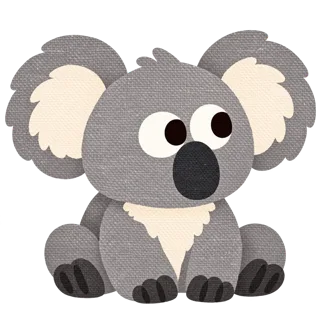 koalako·A·la
From heysaylo.com/resources/multisyllabic-words-speech-therapy. Free to print and use; please don’t sell.
Picture cards: four and five syllables
Cut along the dashed lines. The note under each word splits it into syllables, with the stressed one in capitals.
Ten words with 4 syllables, then hippopotamus and tyrannosaurus with 5. The number in parentheses is the syllable count.
The pictures are emoji, so they look a little different on each phone, computer and printer. Print in color if you can.
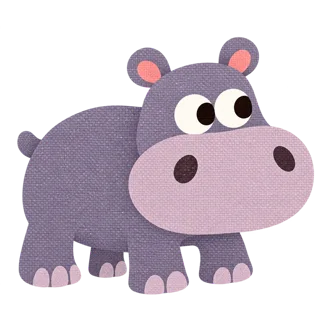 hippopotamuship·po·POT·a·mus (5)
From heysaylo.com/resources/multisyllabic-words-speech-therapy. Free to print and use; please don’t sell.
Build it up, one syllable at a time
Two ways to build a long word. From the end (back-chaining), the child says the last syllable, then adds one syllable in front each time, so every try ends on the part they already know. From the start, they add one syllable at the end each time. For a child who says “nana” for banana, building from the end adds the missing weak syllable last.
| Word | From the end | From the start |
|---|---|---|
| banana | na → NA·na → ba·NA·na | ba → ba·NA → ba·NA·na |
| tomato | to → MA·to → to·MA·to | to → to·MA → to·MA·to |
| computer | ter → PU·ter → com·PU·ter | com → com·PU → com·PU·ter |
| spaghetti | ti → GHET·ti → spa·GHET·ti | spa → spa·GHET → spa·GHET·ti |
| umbrella | la → BREL·la → um·BREL·la | um → um·BREL → um·BREL·la |
| giraffe | RAFFE → gi·RAFFE | gi → gi·RAFFE |
| elephant | phant → e·phant → EL·e·phant | EL → EL·e → EL·e·phant |
| butterfly | fly → ter·fly → BUT·ter·fly | BUT → BUT·ter → BUT·ter·fly |
| kangaroo | ROO → ga·ROO → kan·ga·ROO | kan → kan·ga → kan·ga·ROO |
| watermelon | on → mel·on → ter·mel·on → WA·ter·mel·on | WA → WA·ter → WA·ter·mel → WA·ter·mel·on |
| avocado | do → CA·do → o·CA·do → av·o·CA·do | av → av·o → av·o·CA → av·o·CA·do |
| hippopotamus | mus → a·mus → POT·a·mus → po·POT·a·mus → hip·po·POT·a·mus | hip → hip·po → hip·po·POT → hip·po·POT·a → hip·po·POT·a·mus |
Once every syllable is there, say the whole word at a normal speed, as one smooth word rather than separate beats.
From heysaylo.com/resources/multisyllabic-words-speech-therapy. Free to print and use; please don’t sell.
Phrases and sentences
When the words are steady on their own, move them into short phrases, then sentences. The long words are in bold.
Phrases
- a big banana
- my red umbrella
- a hungry gorilla
- a pink flamingo
- a hot potato
- a tiny ladybug
- a purple butterfly
- a giant dinosaur
- a juicy watermelon
- a noisy helicopter
Sentences
- The gorilla ate a banana.
- A ladybug is on my umbrella.
- The butterfly landed on the pineapple.
- The dinosaur has a computer.
- I saw an elephant and a kangaroo.
- We had spaghetti with tomatoes.
- A caterpillar sat on the avocado.
- The hippopotamus rode the elevator.
- A koala ate a lollipop.
- The crocodile watched television.
Sentences for older children
- The thermometer is in the refrigerator.
- We learned about evaporation and precipitation.
- Photosynthesis needs sunlight and water.
- My vocabulary is getting bigger every day.
- Multiplication is easier with practice.
- The tyrannosaurus was in the auditorium.
From heysaylo.com/resources/multisyllabic-words-speech-therapy. Free to print and use; please don’t sell.
Multisyllabic words practice and data sheet
Student: ____________________ Date: ______________
Goal: ______________________________ Level: words / phrases / sentences
Mark each try: + every syllable said, with the stress in the right place; − a syllable dropped or added; S every syllable said, but with the stress on the wrong one.
| # | Word or phrase | Syllables | Tries (+ − S) | Correct / total |
|---|---|---|---|---|
| 1 | ||||
| 2 | ||||
| 3 | ||||
| 4 | ||||
| 5 | ||||
| 6 | ||||
| 7 | ||||
| 8 | ||||
| 9 | ||||
| 10 | ||||
| 11 | ||||
| 12 |
From heysaylo.com/resources/multisyllabic-words-speech-therapy. Free to print and use; please don’t sell.
How to use the lists
- Clap or tap the syllables. Say the word slowly and clap, tap the table or move a counter for each syllable. Count them together, then say the word again at a normal speed.
- Make the stressed syllable big. Say it a little louder and longer, and keep the weak syllables short but there. In words that start with a weak syllable, such as giraffe and banana, the child has to start with the quiet part.
- Build it up. Use the build-up page: from the end (back-chaining) or from the start, one syllable at a time, until the whole word is there.
- Then go from words to phrases to sentences. ASHA describes treatment that helps a sound or pattern carry over at increasingly challenging levels, such as syllables, words, phrases and sentences, and then conversation (ASHA). Speech motor chaining, for example, moves from syllables to one-syllable words, multisyllabic words, phrases and self-generated sentences (ASHA).
- Pick the stress pattern on purpose. Start with the pattern the child finds easier, then mix patterns, as everyday speech does.
The words don’t target one speech sound, so check each word for sounds the child can’t say yet. If a word has a sound they’re still learning, score the syllables, not the sound, or choose another word. For words by sound and position, see the articulation word lists.
Who these lists are for
- Children who drop weak syllables. Weak syllable deletion is when an unstressed or weak syllable in a word is left out, as in “nana” for banana or “tato” for potato. ASHA’s table of phonological patterns gives it a likely age of elimination of 4 (ASHA). See the phonological processes chart and phonological processes by age.
- Children with childhood apraxia of speech. The features of CAS with some consensus include disrupted transitions between sounds and syllables, such as syllable segregation, and inappropriate prosody, especially in lexical or phrasal stress (ASHA). ASHA says SLPs can adapt multisyllabic word lists for dynamic assessment, and lists multisyllabic words among the tasks in a motor speech assessment (ASHA). See early signs of childhood apraxia and apraxia vs speech sound disorder.
- Older children with errors on long words. Some children pass a test of short words and still have trouble with long ones (James et al., 2016). ASHA lists ongoing difficulty with unfamiliar multisyllabic words among the persisting difficulties in CAS (ASHA). The 5- and 6-syllable school words are for them.
Why stress patterns matter
Children don’t drop just any syllable. Young children learning English often leave out weakly stressed syllables, more often at the start of a word than in the middle or at the end: the weak syllable of a weak-strong word like giraffe is much more likely to be left out than the weak syllable of a strong-weak word like tiger (Gerken, 1994). That’s why every list here is sorted by stress.
Weak-strong words also take longer to sound adultlike. In an acoustic study of 73 Australian English-speaking children aged 3 to 7, stress in strong-weak words was adultlike by 3, but children’s weak-strong words still differed from adults’ at 7. The authors suggest that supports starting stress work with strong-weak words for children 3 and older with prosody difficulties (Ballard et al., 2012).
What the research says about long words
- Long words are common. Polysyllables, words of 3 or more syllables, are almost 30% of the words used in American English (Masso et al., 2018).
- Short-word tests can miss errors. In 283 typically developing Australian English-speaking children aged 3 to 7, most mismatches were in 2-syllable and longer words, with few in one-syllable words, and many age effects were still present at 7. The authors suggest that children, especially school-age children, who pass tests made mostly of one-syllable words may need their longer words checked (James et al., 2016).
- Some patterns last into school. In a model of polysyllabic word development, the constraints that persist to age 7;11 are linked to weak syllables that aren’t at the end of the word and to consonant sequences within words (James et al., 2008).
- Children with speech sound disorders. In 93 preschoolers with speech sound disorders, deleting syllables, consonants or vowels was common in polysyllables (65.6% of children), along with substitutions and alterations of phonotactics and timing (Masso et al., 2016). In 80 preschoolers from the same study, followed over time, polysyllable accuracy improved, but children with frequent deletion errors may be less likely to improve (Masso, McLeod, et al., 2017).
- Long words and reading. In 93 preschoolers with speech sound disorders from the same study, those with low polysyllable accuracy and poor phonological processing were at greater risk of later literacy difficulties (Masso, Baker, et al., 2017). See what is phonological awareness.
Multisyllabic words and apraxia treatment
Several CAS approaches build up to long words. ASHA describes the Nuffield Dyspraxia Program as building from simple syllables up to multisyllabic words, sentences and connected speech, and Rapid Syllable Transition Treatment (ReST) as intensive practice of multisyllabic pseudo-words, smooth transitions from syllable to syllable, and control of syllable stress. ReST tends to be used for children with mild to moderate CAS (ASHA).
A systematic review found the strongest evidence for three CAS approaches: integral stimulation or Dynamic Temporal and Tactile Cueing (DTTC), ReST, and integrated phonological awareness intervention (Murray et al., 2014). In a randomized trial of 26 children aged 4 to 12, both ReST and the Nuffield Dyspraxia Program had large treatment effects with 1-hour sessions 4 days a week for 3 weeks, and ReST kept its gains better 4 months later (Murray et al., 2015).
These lists use real words, and ReST uses nonsense words, so they aren’t a ReST kit. They suit real-word practice and probes. For DTTC, see DTTC for childhood apraxia.
How the words were chosen
- Common words children know, most of them easy to picture, from 2 to 6 syllables.
- Counted by sound, not spelling, in General American English, using standard dictionary pronunciations. Words that many people say with fewer syllables were left out: camera, chocolate, family, broccoli, strawberry (“STRAW-bree”), rhinoceros, veterinarian, favorite and vegetable.
- One stressed syllable marked per word, in capitals: the main stress. Kangaroo is kan·ga·ROO, and watermelon is WA·ter·mel·on.
- Syllable breaks follow the spelling where they can. They show the beats, not exact sounds.
- Pictures are emoji, or a painting where one matches the word. 🐛 is a caterpillar on most devices, and 💻 stands for computer.
Related pages
For data across a caseload, see the speech therapy data sheets. For more picture cards, see the speech picture cards, and use any card set with the speech therapy game board. Writing speech therapy goals has goal examples for weak syllable deletion, and how to choose target words covers word length and probe words.
Common questions
What are multisyllabic words?
Words with more than one syllable, such as rabbit (2), banana (3) or watermelon (4). Research on “polysyllables” usually means words of 3 or more syllables, which are almost 30% of words used in American English (Masso et al., 2018).
What is weak syllable deletion, and when should it stop?
It’s when a child leaves out an unstressed syllable, as in “nana” for banana or “tato” for potato. ASHA’s table of phonological patterns gives it a likely age of elimination of 4.
How do you teach multisyllabic words in speech therapy?
Clap or tap each syllable, make the stressed syllable louder and longer, and build the word one syllable at a time, from the end or the start. Then move to phrases and sentences.
Why use multisyllabic words for childhood apraxia of speech?
Children with CAS can have trouble moving smoothly from syllable to syllable and with stress, and long words have more transitions and a stress pattern to get right. ASHA says SLPs can adapt multisyllabic word lists for dynamic assessment, and approaches such as ReST and the Nuffield Dyspraxia Program work up to multisyllabic words.
What multisyllabic words are good for older students?
Words from their classes, such as multiplication, photosynthesis, vocabulary and electricity. The 5- and 6-syllable page has two lists, fun words and school words.
Can I print these multisyllabic word lists for my caseload?
Yes. They’re free to print and use with your students and clients and to send home. Please don’t sell them.
Request a resource or send feedback
Want another version of this, or something new? Spotted a mistake? Tell us.
Sources
- ASHA Practice Portal: Selected phonological patterns.
- ASHA Practice Portal: Speech sound disorders (articulation and phonology).
- ASHA Practice Portal: Childhood apraxia of speech.
- Gerken, L. (1994). A metrical template account of children’s weak syllable omissions from multisyllabic words. Journal of Child Language, 21(3), 565–584.
- Ballard, K. J., Djaja, D., Arciuli, J., James, D. G., & van Doorn, J. (2012). Developmental trajectory for production of prosody: Lexical stress contrastivity in children ages 3 to 7 years and in adults. Journal of Speech, Language, and Hearing Research, 55(6), 1822–1835.
- Masso, S., McLeod, S., & Baker, E. (2018). Tutorial: Assessment and analysis of polysyllables in young children. Language, Speech, and Hearing Services in Schools, 49(1), 42–58.
- James, D. G., Ferguson, W. A., & Butcher, A. (2016). Assessing children’s speech using picture-naming: The influence of differing phonological variables on some speech outcomes. International Journal of Speech-Language Pathology, 18(4), 364–377.
- James, D. G., van Doorn, J., & McLeod, S. (2008). The contribution of polysyllabic words in clinical decision making about children’s speech. Clinical Linguistics & Phonetics, 22(4–5), 345–353.
- Masso, S., McLeod, S., Baker, E., & McCormack, J. (2016). Polysyllable productions in preschool children with speech sound disorders: Error categories and the Framework of Polysyllable Maturity. International Journal of Speech-Language Pathology, 18(3), 272–287.
- Masso, S., McLeod, S., Wang, C., Baker, E., & McCormack, J. (2017). Longitudinal changes in polysyllable maturity of preschool children with phonologically-based speech sound disorders. Clinical Linguistics & Phonetics, 31(6), 424–439.
- Masso, S., Baker, E., McLeod, S., & Wang, C. (2017). Polysyllable speech accuracy and predictors of later literacy development in preschool children with speech sound disorders. Journal of Speech, Language, and Hearing Research, 60(7), 1877–1890.
- Murray, E., McCabe, P., & Ballard, K. J. (2014). A systematic review of treatment outcomes for children with childhood apraxia of speech. American Journal of Speech-Language Pathology, 23(3), 486–504.
- Murray, E., McCabe, P., & Ballard, K. J. (2015). A randomized controlled trial for children with childhood apraxia of speech comparing Rapid Syllable Transition Treatment and the Nuffield Dyspraxia Program–Third Edition. Journal of Speech, Language, and Hearing Research, 58(3), 669–686.