
Free resource for speech-language pathologists (SLPs)
Free printable articulation carryover stories for 7 sounds
Updated
How to use it
Seven printable stories for K, L, SH, CH, TH, Z and S blends, one per page, for practice beyond sentences. Each is about 100 words, uses the target 14 to 19 times at the start, middle and end of words, and lists the target words underneath with the total, so you can score percent correct as you listen. Three questions per story move from retelling to the child’s own life, which is closer to conversation.
How to print
- Pick the pages. Everything is ticked. Untick what you don’t need, or use a shortcut below.
- Press Print. Each page prints on its own sheet of US letter paper.
- Choose your printer in the print window, or “Save as PDF” to keep a copy.
K story: the cake
Read it, retell it, then talk about it. Read the story aloud together, one sentence at a time if that helps. Then the child retells it in their own words and answers the questions.
The cake. Grandpa and I made a cake for my cousin. I cracked the eggs, and a bit of shell fell in! Grandpa picked it out with a spoon. We baked it and set it by the window to cool. It smelled so good. Then the dog barked at the door, and we ran to see who was there. When we got back, the cake had a big bite out of it. Who took it? Our dog sat in the corner with frosting on his nose. We all laughed, then made a new cake and a batch of cookies for my cousin.
Target words (19 K sounds): cake ×3 (two K sounds each), cookies (two), cracked (two), cousin ×2, cool, corner, picked, baked, barked, back, took.
- What did Grandpa and the child make, and who was it for?
- Who took a bite of the cake, and how could they tell?
- Tell me about something you’ve cooked or baked. What went in it?

From heysaylo.com/resources/articulation-carryover-stories. Free to print and use; please don’t sell.
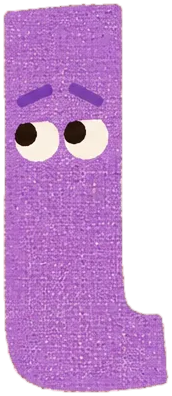
L story: the yellow balloon
Read it, retell it, then talk about it. Read the story aloud together, one sentence at a time if that helps. Then the child retells it in their own words and answers the questions.
The yellow balloon. At the park, a little girl let go of her yellow balloon. It floated up, past the tall trees and over the lake. It went higher and higher. “Where is it going?” she cried. The girl felt sad, so her dad held her hand. They went after the balloon. At the end of the path, it was stuck in a tree by the pond. A boy climbed up and got it down for her. “Here you go!” he said. The girl smiled and said, “Thank you so much!” Then they went on the swings together until lunch.
Target words (18 L sounds): little (two L sounds), girl ×3, balloon ×2, let, yellow, floated, tall, lake, felt, held, climbed, smiled, until, lunch.
- What did the girl let go of, and where did it go?
- How did the boy help her?
- Tell me about a time you lost something. How did you feel, and what happened?
From heysaylo.com/resources/articulation-carryover-stories. Free to print and use; please don’t sell.
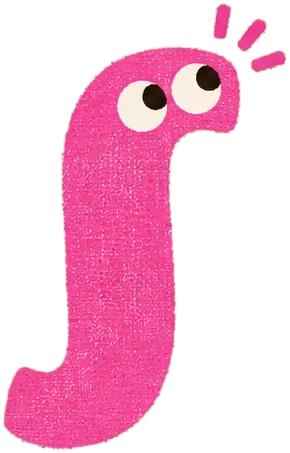
SH story: the fisherman
Read it, retell it, then talk about it. Read the story aloud together, one sentence at a time if that helps. Then the child retells it in their own words and answers the questions.
The fisherman. A fisherman took his ship out on the ocean. He wished for a big fish for supper. He threw his net into the water and pulled it up. There was no fish, just a shiny shell and an old shoe! He laughed and tossed the shoe back with a splash. Then something bumped the boat. It was a shark! The fisherman shouted, “Shoo, shark!” and it swam away. Then he rowed back to land. He didn’t catch any supper that day, but he took the shell home for his daughter. It sits by her bed now.
Target words (17 SH sounds): fisherman ×2, fish ×2, shell ×2, shoe ×2, shark ×2, ship, ocean, wished, shiny, splash, shouted, shoo.
- What did the fisherman find in his net?
- What did he do when the shark came?
- If you went fishing, what would you hope to catch, and what would you do with it?
From heysaylo.com/resources/articulation-carryover-stories. Free to print and use; please don’t sell.
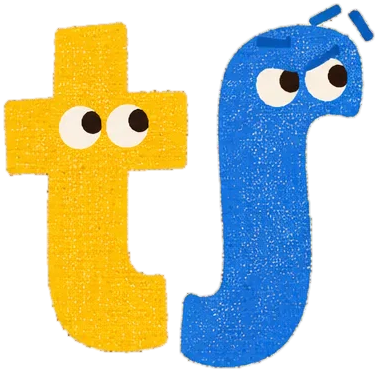
CH story: the beach picnic
Read it, retell it, then talk about it. Read the story aloud together, one sentence at a time if that helps. Then the child retells it in their own words and answers the questions.
The beach picnic. On a sunny day, we packed a picnic lunch in the kitchen and drove to the beach. We brought cheese, crackers, peaches and chocolate chip cookies. I found a chair by the water and sat down to eat. Suddenly a seagull swooped down and snatched a chip from my hand! I chased it, but it was too fast. My dad laughed so much he had to sit down. We watched the seagull munch on the chip. Then we chose a new spot, far from the birds, and finished our lunch in peace. It was a great day.
Target words (17 CH sounds): chip ×3, lunch ×2, kitchen, beach, cheese, peaches, chocolate, chair, snatched, chased, much, watched, munch, chose.
- What food did the family bring to the beach?
- What did the seagull take, and what happened next?
- Tell me about a picnic or a meal you’ve had outside. What did you eat?
From heysaylo.com/resources/articulation-carryover-stories. Free to print and use; please don’t sell.
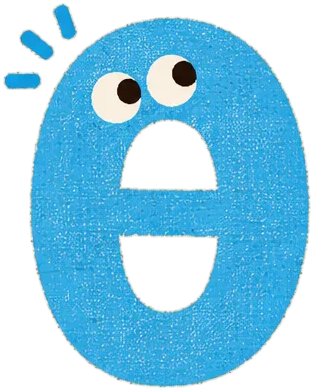
TH story: the lost tooth
Read it, retell it, then talk about it. Read the story aloud together, one sentence at a time if that helps. Then the child retells it in their own words and answers the questions.
The lost tooth. On Thursday, my big sister lost a tooth at lunch. It fell out of her mouth and into a bowl of soup! She was so surprised she dropped her spoon. For a moment, she said nothing. I fished it out using a fork and gave it to her. She thanked me and wrapped it in a cloth. At bath time, she kept thinking about it. “I think a tooth fairy might bring me something,” she said. Next morning, she found three shiny coins under her pillow. She was thrilled, and she gave me one to say thank you.
Target words (14 TH sounds, all TH as in thumb): tooth ×2, Thursday, mouth, nothing, thanked, cloth, bath, thinking, think, something, three, thrilled, thank. The story has no voiced TH words such as “the”.
- What happened to the sister’s tooth at lunch?
- What did she find under her pillow, and what did she do then?
- Tell me about a time you lost a tooth, or what you think it would feel like.
From heysaylo.com/resources/articulation-carryover-stories. Free to print and use; please don’t sell.
Z story: the busy bee
Read it, retell it, then talk about it. Read the story aloud together, one sentence at a time if that helps. Then the child retells it in their own words and answers the questions.
The busy bee. A fuzzy bee buzzed around the zoo. It zoomed past a zebra and landed on a lion’s nose. The lion sneezed! Then it went back to sleep. The bee zipped away and found a sunflower full of sweet pollen. Nearby, a boy at the zoo sat down to eat raisins and cheese. The bee buzzed over to his lunch. “Please go away, bee,” he said. But the bee wanted the cheese! So the boy put a raisin on a rock, and the bee flew over to it. Now everyone had a snack.
Target words (18 Z sounds): buzzed ×2, zoo ×2, cheese ×2, raisins (two Z sounds), fuzzy, zoomed, zebra, lion’s, nose, sneezed, zipped, raisin, his, please. The title isn’t counted.
- Where did the bee fly, and what did the lion do?
- How did the boy get the bee away from his lunch?
- Which animals would you visit at the zoo, and why?
From heysaylo.com/resources/articulation-carryover-stories. Free to print and use; please don’t sell.
S blends story: the snowy day
Read it, retell it, then talk about it. Read the story aloud together, one sentence at a time if that helps. Then the child retells it in their own words and answers the questions.
The snowy day. When I woke up, snow was falling. I put on my scarf and my striped sweater and ran out the door. My little brother was still asleep, so I made a snowman by myself. I gave it a stick for a nose and stones for eyes. Then my brother came out and threw a snowball. It splashed on my sleeve! We both started laughing. We slid down the hill on a sled until our hands got stiff and cold. At last, Mom called us in for hot soup, and we sat by the window and watched the snow fall.
Target words (18 S blends): snow ×2, scarf, striped, sweater, still, asleep, snowman, stick, stones, snowball, splashed, sleeve, started, slid, sled, stiff, last. Single S sounds, as in “soup”, and the title aren’t counted.
- What did the child make in the snow?
- What did they use for the snowman’s nose and eyes?
- What do you like to do on a snowy day, or on a very hot one?
From heysaylo.com/resources/articulation-carryover-stories. Free to print and use; please don’t sell.
How to use the stories
- Read it together. A child who reads can read it aloud; a younger child can say each sentence after you.
- Retell it. The child tells the story back in their own words, with the first two questions as prompts.
- Talk about it. The last question turns to the child’s own life, which is closer to real conversation.
- Count as you listen. Each sheet gives the number of target sounds in the story, so percent correct is the correct productions divided by that number, times 100. In a retell or a chat, count the child’s own attempts instead.
ASHA lists storytelling or retelling, describing pictures, and conversation about a topic of interest as ways to elicit connected speech (ASHA). For eliciting and scoring a conversation sample, see conversational speech samples for articulation; to log trials, use the free speech therapy data sheets.
Where stories fit in carryover
ASHA describes generalization as carrying a sound to increasingly challenging levels, from syllables and words to phrases, sentences and conversation (ASHA). Reading a story aloud is still structured practice, so treat it as a step before conversation rather than proof of carryover.
- Connected speech can differ from word tests. In 61 children with speech delay assessed with both an articulation test and a conversational sample, accuracy differed significantly, and errors across word boundaries showed up only in continuous speech (Morrison & Shriberg, 1992).
- Self-monitoring has mixed evidence. Small studies from one research group found that self-monitoring helped sounds carry over outside the clinic (Koegel, Koegel & Ingham, 1986; Koegel et al., 1988), but a replication with 8 school-age children didn’t find the same effect (Gray & Shelton, 1992).
More in improving articulation carryover, and for families, why a child can say a sound in therapy but not at home.
Making it easier or harder
- Easier: read one sentence at a time and pause after each target word, or practice the target words from the list first.
- Harder: retell the story without the page, change the ending, or tell a new story about the same character.
- Closer to everyday talk: ask a parent or teacher to listen to the retell, or use the last question as the start of a real chat in a new place.
How the stories were written
- Counted by sound, not spelling. The K count includes the C in “cousin” and both K sounds in “cake”; SH includes “ocean”; CH includes the TCH in “kitchen”.
- Z counts every Z sound, including plural endings (raisins), the S in “lion’s”, and words like “his” and “please”.
- TH is TH as in thumb. The TH story leaves out voiced TH words such as “the” and “with”, so every TH you hear is a target. Two are in THR blends (three, thrilled).
- No silent L. The L story avoids words like “walk” and “could”, where the L isn’t said.
- S blends count S clusters at the start, middle and end of words (snow, asleep, last). Single S sounds aren’t counted.
- Original and inclusive. Every story is new, about 100 words, in General American English, with no brand names. Swap any detail that doesn’t suit the child, and recount if you change a target word.
Common questions
What is a carryover story in speech therapy?
A short story loaded with one target sound, used after a child can say the sound in sentences. Reading, retelling and talking about it gives practice in longer, more natural speech on the way to conversation.
How do I score a story for articulation?
Each sheet gives the total number of target sounds. Mark each one correct or not as the child reads, then divide the correct ones by the total and multiply by 100. For a retell, count the child’s own attempts.
Is reading a story the same as conversation?
No. Reading and retelling are still structured, so a child may be more accurate than in everyday talk. Check carryover with a conversation sample, ideally with a different listener or setting.
What if the child can’t read yet?
Read one sentence at a time and have the child say it after you. Then ask the questions and let them retell the story in their own words.
Request a resource or send feedback
Want another version of this, or something new? Spotted a mistake? Tell us.
Sources
- ASHA Practice Portal: Speech sound disorders (articulation and phonology).
- Morrison, J. A., & Shriberg, L. D. (1992). Articulation testing versus conversational speech sampling. Journal of Speech and Hearing Research, 35(2), 259–273.
- Koegel, L. K., Koegel, R. L., & Ingham, J. C. (1986). Programming rapid generalization of correct articulation through self-monitoring procedures. Journal of Speech and Hearing Disorders, 51(1), 24–32.
- Koegel, R. L., Koegel, L. K., Van Voy, K., & Ingham, J. C. (1988). Within-clinic versus outside-of-clinic self-monitoring of articulation to promote generalization. Journal of Speech and Hearing Disorders, 53(4). ERIC record.
- Gray, S. I., & Shelton, R. L. (1992). Self-monitoring effects on articulation carryover in school-age children. Language, Speech, and Hearing Services in Schools, 23(4).